ServSafe Allergens Practice Test
Take a free 20-question allergens quiz here, with no sign-up. Every answer is explained at the end. The 75% mark is our own practice target.
Start the free 20-question allergens quiz
- 20 questions · 30 minutes · pass mark 75%
- Answers and explanations are shown at the end, with every question to review.
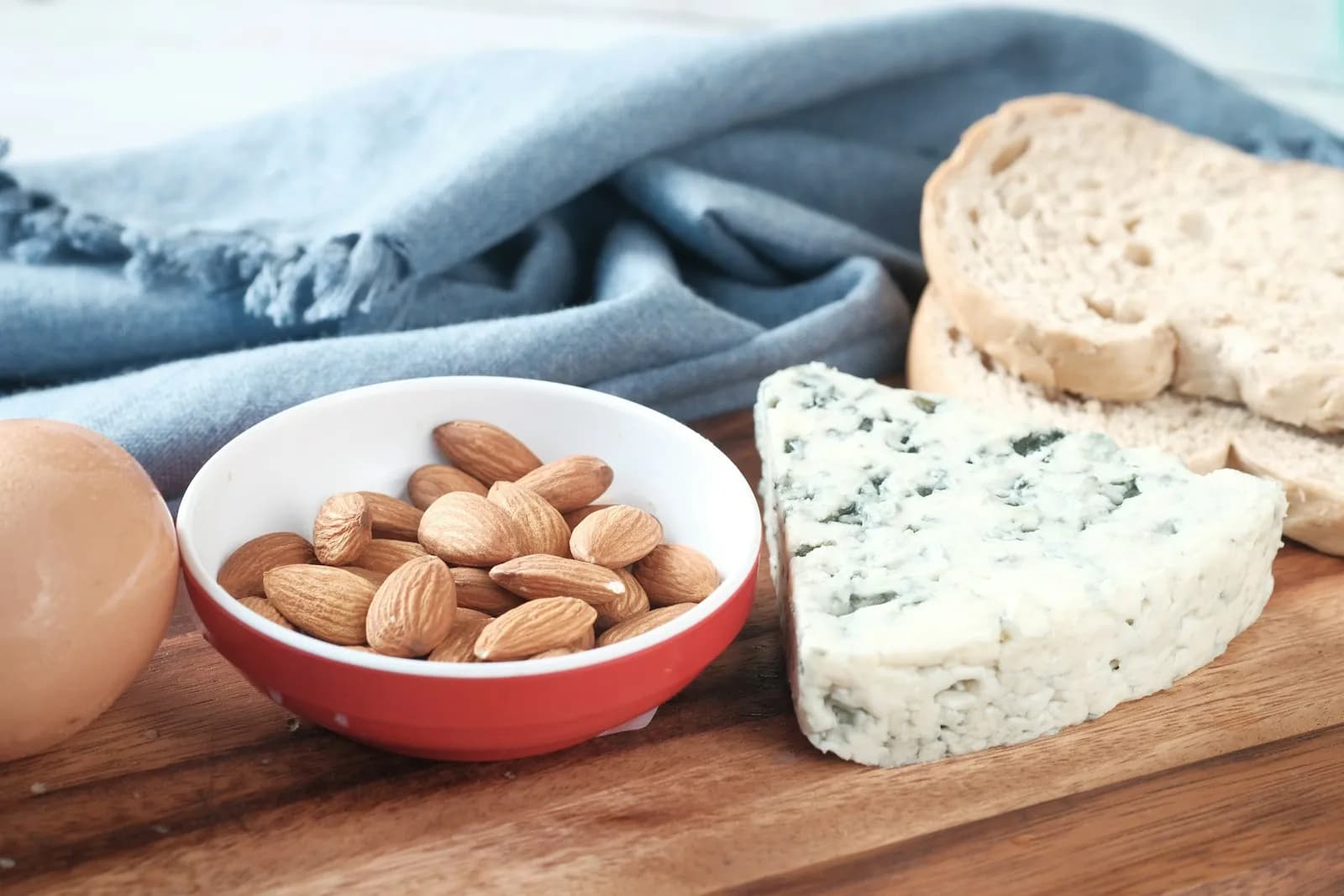
The Allergens exam at a glance
- Questions
- 40 multiple choice
- Official pass mark
- Not on the public pages we checked
- Our practice target
- 75%
- Valid for
- 3 years
- Price
- $25, course and exam
- Course length
- About 1 hour
- Language
- English
From ServSafe's product page and FAQ. You can also try the topic at other levels: Manager food allergens quiz and Food Handler food allergens quiz.
The nine major allergens
US law names nine major food allergens. A 2004 law named the first eight, and a 2021 law added sesame. Source: FDA food allergies overview and FDA consumer guide.
Milk
A label can name it in parentheses, as in “whey (milk)”.
Eggs
One of the eight foods named in the 2004 law.
Fish
FDA gives bass, flounder and cod as examples.
Crustacean shellfish
FDA gives crab, lobster and shrimp as examples.
Tree nuts
FDA gives almonds, walnuts and pecans as examples.
Peanuts
FDA lists peanuts apart from tree nuts.
Wheat
A label can name it in parentheses, as in “flour (wheat)”.
Soybeans
A label can name it in parentheses, as in “lecithin (soy)”.
Sesame
The ninth major allergen, effective January 1, 2023.
Your state's rule
ServSafe says allergen training is required in several states. We list three states where we read the rule on an official page. Other states may have rules too. Rules change, so check with your state or local health agency. ServSafe also has a regulatory requirements page.
- Illinois
- Certified food protection managers in Category I (high risk) restaurants need ANSI-accredited allergen awareness training within 30 days of starting work and every 3 years. Food handlers without manager certification do not need it. Some exceptions apply.
- Source: Illinois Department of Public Health
- Massachusetts
- Each food establishment needs a certified food protection manager trained in allergen awareness. The state says that certification is valid for five years. ServSafe says Massachusetts only recognizes its Massachusetts Allergens training.
- Source: Massachusetts Department of Public Health, ServSafe Allergens FAQ
- Rhode Island
- The state requires food establishments to train staff on allergy awareness. It says ANSI-approved Certified Food Safety Manager courses include a section on allergy awareness.
- Source: Rhode Island Department of Health
What the Allergens exam covers
ServSafe's product page names four areas. We found no official percentage for any of them, and our quiz questions are not sorted by these areas yet.
- Allergen Fundamentals
- Front of the House
- Back of the House
- Managing Emergencies
ServSafe's course outline also names symptoms, identifying allergens, communication, special dietary requests, workstations and self-serve areas, food labels, deliveries, food preparation, cleaning and personal hygiene.
These are our own practice questions, not real exam questions.
10 sample Allergens questions and answers
10 of our 121 questions, with the answer and why.
1. A kitchen allergy briefing distinguishes microbes from allergens. Which part of a food can trigger an allergic immune response?
Answer: Certain proteins in food
- A) Certain proteins in food (correct answer)
- B) Only bacteria growing in food
- C) Only the temperature of food
- D) Only artificial colors or preservatives
Why: FDA identifies food proteins as the allergy trigger. Bacteria cause infection hazards rather than define the protein-triggered response.
Source: FDA: Food Allergies, Food Allergies
2. A bakery switches from rice flour to wheat flour in a roll. What new major allergen does the stated substitution introduce?
Answer: Wheat
- A) Egg
- B) Sesame
- C) Wheat (correct answer)
- D) Peanuts
Why: The replacement flour is wheat, which is a major allergen. The stated substitution does not introduce peanuts.
Source: FDA: Food Allergies, Major Food Allergens
3. On an ingredient list, what allergen source is identified by the wording whey (milk)?
Answer: Milk
- A) Egg
- B) Milk (correct answer)
- C) Wheat
- D) Soy
Why: The parenthetical declaration identifies milk as the source. The similar-looking word whey does not declare wheat.
Source: FDA: Food Allergies, Food Labels and Allergens
4. Which proposed manufacturing practice is NOT consistent with FDA allergen guidance?
Answer: Use a may contain warning instead of good manufacturing practices
- A) Keep advisory wording truthful
- B) Avoid misleading allergen claims
- C) Maintain good manufacturing practices despite a warning
- D) Use a may contain warning instead of good manufacturing practices (correct answer)
Why: FDA says advisory statements should not substitute for good manufacturing practices. FDA says the wording must be truthful.
Source: FDA: Food Allergies, Food Labels and Allergens
5. Flour dust drifts onto an uncovered meal being prepared for a guest avoiding wheat. Why is the dust relevant?
Answer: Airborne allergen material can create cross-contact
- A) Dust cannot matter unless the meal is uncooked
- B) An allergen must remain in a visible pile to be relevant
- C) Airborne allergen material can create cross-contact (correct answer)
- D) Only direct pouring can transfer a food allergen
Why: FDA identifies allergen-containing dust or aerosols as a cross-contact route. FDA also identifies dust and aerosols as transfer routes.
Source: FDA: Food Allergies, Food Labels and Allergens
6. Under the FDA model Food Code, how are consumers to be notified of major-allergen ingredients in unpackaged food?
Answer: By written notification
- A) By omitting the ingredients from the menu record
- B) By written notification (correct answer)
- C) Only by a private conversation among cooks
- D) Only when a guest experiences a reaction
Why: The Code specifies written notification to consumers. A private staff conversation does not notify consumers in writing.
Source: FDA Food Code 2026, 3-602.12(C)
7. A ladle rests with its food-contact end in a peanut-containing sauce, then is used for an otherwise peanut-free sauce. Which conclusion is sound?
Answer: The second sauce needs assessment for unintended peanut introduction
- A) Different sauce names prevent peanut transfer
- B) A larger second batch guarantees peanut absence
- C) A clean ladle handle guarantees a clean food-contact end
- D) The second sauce needs assessment for unintended peanut introduction (correct answer)
Why: The used ladle is a route for cross-contact into the second sauce. Names do not prevent material transfer.
Source: FDA: Allergen Removal and Transfer Using Wiping and Cleaning Methods in Retail Food Establishments, Allergen removal study
8. A guest repeatedly feels ill after eating a particular food but has no diagnosis. What role should the server avoid taking?
Answer: Diagnosing the cause instead of referring the guest for healthcare evaluation
- A) Taking the concern seriously
- B) Recommending contact with a healthcare provider
- C) Avoiding a claim that the guest has been medically diagnosed
- D) Diagnosing the cause instead of referring the guest for healthcare evaluation (correct answer)
Why: FDA recommends healthcare testing and evaluation for suspected food-allergy symptoms. Taking the guest's concern seriously is appropriate; the role staff should avoid is diagnosing the cause themselves.
Source: FDA: Food Allergies: What You Need to Know, What to Do If Symptoms Occur
9. A guest says a previous reaction was mild, so a future reaction cannot be serious. What is the correct response to that reasoning?
Answer: A mild reaction does not establish that the allergy is mild
- A) A mild previous reaction guarantees future safety
- B) Only the first lifetime reaction can be serious
- C) Staff may set a safe allergen portion from that history
- D) A mild reaction does not establish that the allergy is mild (correct answer)
Why: FDA says any allergic reaction has potential to lead to anaphylaxis. A mild previous reaction does not guarantee that future reactions will remain mild.
Source: FDA: Food Allergies: What You Need to Know, Food Allergies Can Be Life-Threatening
10. A severe allergic reaction is suspected and an emergency response is underway. Which approach matches FDA's emphasis?
Answer: Prompt access to epinephrine when indicated and medical care
- A) Wait for a guaranteed diagnosis from the server
- B) Rely on menu correction as the only emergency treatment
- C) Prompt access to epinephrine when indicated and medical care (correct answer)
- D) Delay medical help while staff debate the exact ingredient
Why: FDA connects prompt epinephrine and medical intervention with preventing life-threatening outcomes. Debating ingredients must not replace prompt treatment and care.
Source: FDA: Food Allergies: What You Need to Know, Food Allergies Can Be Life-Threatening
Cross-contact and cross-contamination
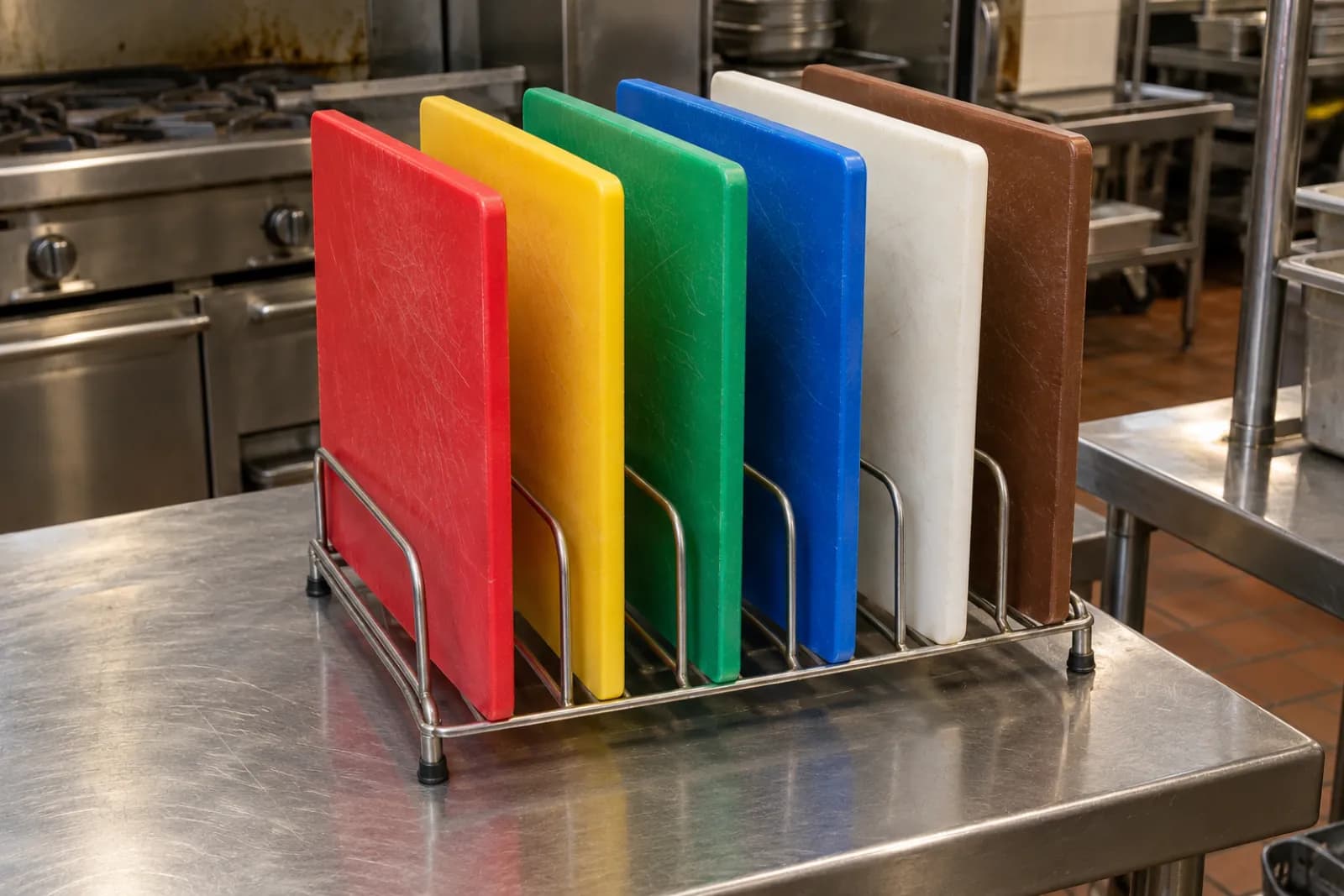
Allergen cross-contact means an allergen gets into a food by accident. FDA says its Food Code wiping and cleaning advice focused on germs, so it studied how well those methods remove allergens.
In an FDA study, full cleaning (wash, rinse, sanitize, air dry) removed allergens well. Dry wipes did worse than wet ones. CDC advises separate equipment and areas when you can. If you cannot, clean and sanitize first.
Timed Allergens mocks and the plan
There is no free Allergens mock. All 3 are on the Allergens + Alcohol Plan, which also covers the mocks for the ServSafe Alcohol practice test.
You sit one fixed paper of 40 questions against a 60-minute clock, and no question repeats between papers. 75% is our own practice target. We found no official pass mark in ServSafe's public pages.
- Allergens mock exam 140 questions, on the plan
- Allergens mock exam 240 questions, on the plan
- Allergens mock exam 340 questions, on the plan
Allergens + Alcohol Plan
6 timed 40-question mock exams, 3 for each exam. $2.99 a month. Cancel in one click. Includes a printable PDF pack.
Plans are not on sale yet.
compare the three monthly plansServSafe Allergens FAQ
What is the pass mark for ServSafe Allergens?
We found no pass mark in ServSafe's public pages. The 75% on this site is our own practice target. Ask ServSafe if you need the official figure.
Who needs the ServSafe Allergens certificate?
ServSafe's FAQ says allergen training is required in several states, and the course has no prerequisite. Your state or employer decides if you need it. See what ServSafe certification you need.
How long does the certificate last?
ServSafe's FAQ says three years, and state or employer rules can vary. Read more on how long a ServSafe Allergens certificate lasts.
How many attempts do I get?
ServSafe's pages do not agree. The product page says unlimited attempts and 90 days to finish once you start. The FAQ says 3 attempts and 60 days. Check before you buy.
Are these the real exam answers?
No. These are answers to our own practice questions. See the sources behind each allergen answer.