ServSafe Manager: Food allergens Questions
The nine major US allergens, label reading, cross-contact and talking with guests about their allergies.
29 questions in this topic. The quiz draws 20 at a time. Free, with no sign-up.
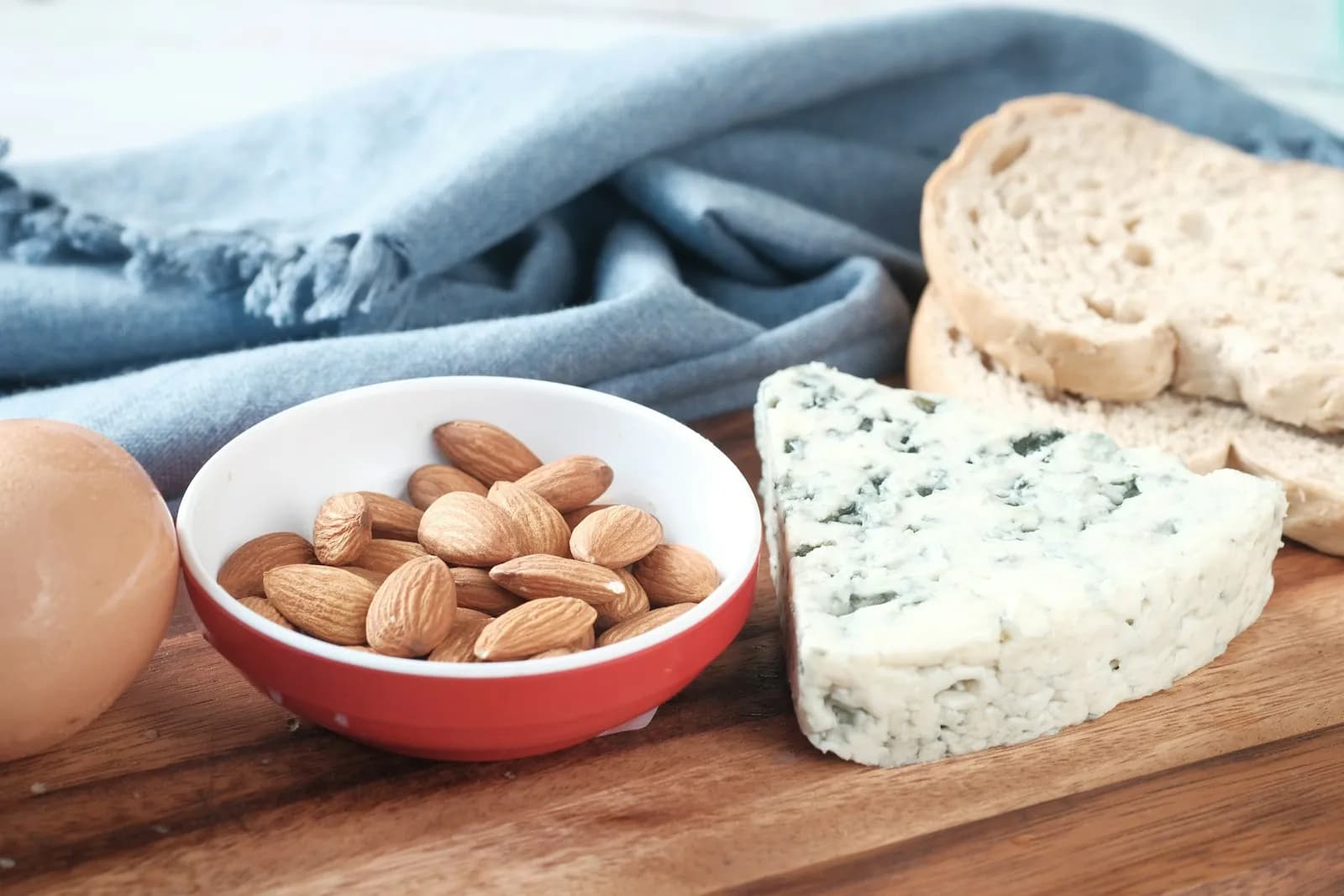
Food allergens practice quiz
- 20 questions · 30 minutes · pass mark 70%
- Answers and explanations are shown at the end, with every question to review.
Key numbers
- 9 major food allergens: milk, egg, fish, crustacean shellfish, tree nuts, wheat, peanuts, soybeans, sesame
- Highly refined oil from these foods: not a major food allergen
- Packaged food label: names the food source of each major allergen
- Unpackaged food with a major allergen as an ingredient: the customer gets written notice
- Person in charge: makes sure staff are trained in food allergy awareness
Source: FDA Food Code 2022, 1-201.10, 2-103.11, 3-602.11, 3-602.12
7 sample food allergens questions and answers
7 of our 29 questions, with the answer and why.
1. A restaurant adds tahini made from sesame to a previously sesame-free sauce. How is sesame classified in the FDA 2026 major-allergen definition?
Answer: Sesame is a major food allergen
- A) Sesame is excluded whenever it is ground
- B) Sesame is a major food allergen (correct answer)
- C) Sesame counts only when served as whole seeds
- D) Sesame is listed only as a preservative
Why: Sesame is specifically named in the major-allergen definition. Grinding does not remove sesame from the listed category.
Source: FDA Food Code 2026, 1-201.10
2. A sauce ingredient contains protein derived from a listed major-allergen food but has a different product name. How should the review treat it?
Answer: It can fall within the major-allergen definition
- A) Ignore it whenever the product name differs
- B) It can fall within the major-allergen definition (correct answer)
- C) Review only whole unprocessed foods
- D) Treat all protein powders as automatically exempt
Why: The definition includes ingredients containing protein derived from listed foods. A different name does not remove protein-derived ingredients.
Source: FDA Food Code 2026, 1-201.10
3. A cafe serves an unpackaged dish containing a major allergen. Which form of notification does the model code require?
Answer: Written notification of the allergen's presence as an ingredient
- A) Only a verbal answer if the customer happens to ask
- B) Written notification of the allergen's presence as an ingredient (correct answer)
- C) Only an internal purchasing note
- D) Only an employee's memory of the recipe
Why: The unpackaged-food rule specifies written consumer notification. An optional oral answer alone does not meet the written-notification provision.
Source: FDA Food Code 2026, 3-602.12
4. An unpackaged bakery item now uses egg in a recipe change. What must its consumer information accurately reflect under the model code?
Answer: The major allergen now present as an ingredient
- A) Only the old recipe because the item name is unchanged
- B) The major allergen now present as an ingredient (correct answer)
- C) Only allergens present in the previous production run
- D) Only allergens the baker considers common
Why: Written notification must reflect actual major-allergen ingredients. An unchanged name does not erase a new allergen ingredient.
Source: FDA Food Code 2026, 3-602.12
5. A restaurant can reasonably provide a separate preparation area and equipment for allergy orders. Which choice follows CDC's restaurant recommendation?
Answer: Use the separate area and equipment for those meals
- A) Use the separate area and equipment for those meals (correct answer)
- B) Use the shared station after a dry wipe instead of the feasible separate preparation arrangement
- C) Use the separate area but reuse the uncleaned tools from other orders
- D) Rely only on the customer's disclosure and keep preparation practices unchanged
Why: CDC recommends separate equipment and areas for allergy meals when feasible. A dry wipe does not implement the recommendation to use separate equipment and areas when feasible.
Source: CDC: Food Allergy Reactions in Restaurants, Key takeaways
6. A guest with a shellfish allergy orders french fries. The restaurant's only fryer is also used for breaded shrimp. What should the server and kitchen understand about these fries?
Answer: The shared oil can carry shrimp protein, so the fries are not free of the allergen
- A) Hot frying oil destroys allergen proteins, so the fries are safe
- B) The shared oil can carry shrimp protein, so the fries are not free of the allergen (correct answer)
- C) The fries are safe as long as no shrimp pieces are visible
- D) The fries are safe if the shrimp were fried more than an hour earlier
Why: CDC notes that oil in fryers used for several foods can contain protein from previously fried foods. Fries from a shared shrimp fryer are not allergen-free, and CDC suggests considering a fryer designated for one type of food.
Source: CDC MMWR: Restaurant Food Allergy Practices, Six Selected Sites, United States,2014, Discussion
7. A guest who told the server about a milk allergy finished eating about 90 minutes ago and now has an itchy rash. A coworker says the meal cannot be the cause because too much time has passed. Which response is accurate?
Answer: Treat it as a possible reaction, because symptoms can appear from minutes to a few hours after eating
- A) Rule out the meal, because allergic reactions only start within seconds
- B) Treat it as a possible reaction, because symptoms can appear from minutes to a few hours after eating (correct answer)
- C) Wait until the next day to see whether the rash is from the meal
- D) Assume it is unrelated, because a rash is never an allergy symptom
Why: FDA states that allergy symptoms may appear from within a few minutes to a few hours after the food is eaten, and rash is a listed symptom. A 90-minute delay does not rule out the meal.
Source: FDA: Food Allergies: What You Need to Know, Know the Symptoms of Food Allergies
Keep practicing
Allergen rules are one short topic among the ServSafe Manager exam questions we have written.
Ready for a full paper? Try the free 90-question ServSafe practice test.
Studying for the other exam? Try the Food Handler food allergens quiz.
Active managerial control, the seven HACCP principles, critical limits and corrective actions.
67 questions in the pool, free
Cleaning versus sanitizing, sanitizer strength, dishwashing and three-compartment sinks.
90 questions in the pool, free
Handwashing sinks, plumbing, backflow, ventilation, lighting and approved equipment.
68 questions in the pool, free