ServSafe Manager: Cleaning and sanitizing Questions
Cleaning versus sanitizing, sanitizer strength, dishwashing and three-compartment sinks.
90 questions in this topic. The quiz draws 20 at a time. Free, with no sign-up.
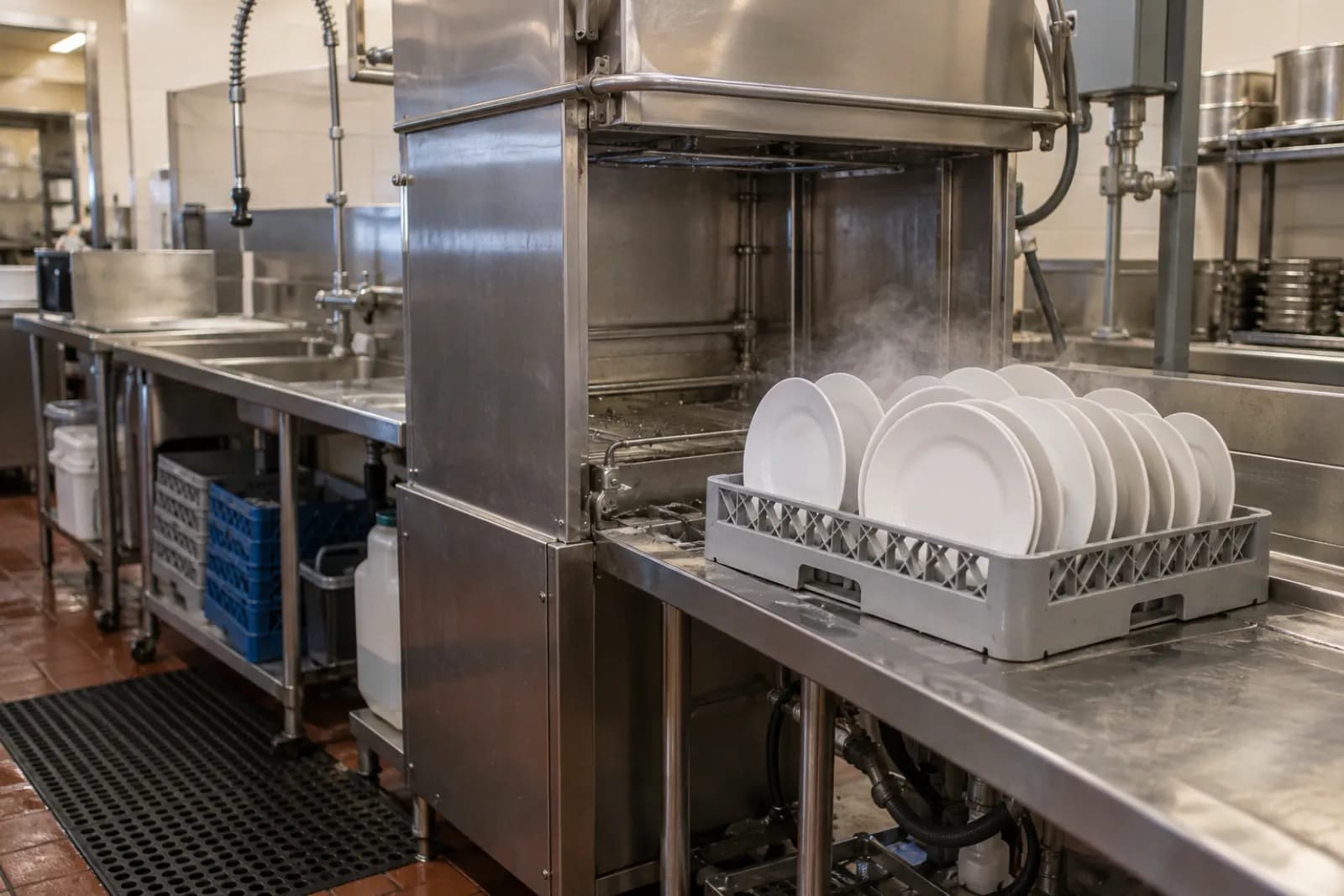
Cleaning and sanitizing practice quiz
- 20 questions · 30 minutes · pass mark 70%
- Answers and explanations are shown at the end, with every question to review.
Key numbers
- Manual wash water: at least 110°F, or the temperature on the cleaner's label
- Hot water sanitizing by hand: 171°F or above for at least 30 seconds
- Chlorine at 50 to 99 mg/L (ppm): 75°F at pH 8 or less, 100°F at pH 10 or less
- Iodine: 12.5 to 25 mg/L (ppm) at 68°F or above
- Quaternary ammonium: 75°F or above, at the strength on the label
Source: FDA Food Code 2022, 4-301.12, 4-501.19, 4-501.111, 4-501.114, 4-603.16, 4-703.11, 4-901.11
What are the 3 compartment sink steps?
A 3 compartment sink has one step per compartment: wash to remove soil, rinse off the cleaner, then sanitize with heat or chemicals. Let items air-dry.
10 sample cleaning and sanitizing questions and answers
10 of our 90 questions, with the answer and why.
1. What basic cleanliness condition must food-contact surfaces and utensils meet before their required sanitizing step?
Answer: Clean to sight and touch
- A) Only free of a strong odour
- B) Only visibly clean without considering residue detectable by touch
- C) Clean to sight and touch (correct answer)
- D) Only wiped until they look shiny from a distance
Why: The code requires food-contact surfaces and utensils to be visibly and tactually clean. Odour alone does not establish sight-and-touch cleanliness.
Source: FDA Food Code 2026, 4-601.11
2. Equipment operates in a qualifying refrigerated prep room held at 41°F (5°C) or below. With the other stated conditions met, which chart interval may apply?
Answer: 24 hours
- A) 36hours
- B) 48 hours
- C) No cleaning while the room stays cold
- D) 24 hours (correct answer)
Why: The refrigerated-room chart pairs 41°F or below with 24 hours. 36hours exceeds this refrigerated-room chart entry.
Source: FDA Food Code 2026, 4-602.11
3. Before the full wash cycle, plates carry heavy food debris. What precleaning step is specified?
Answer: Scrape debris to the appropriate waste destination or use a suitable prewash
- A) Scrape debris to the appropriate waste destination or use a suitable prewash (correct answer)
- B) Load heavily soiled plates without scraping because the main wash is hot
- C) Add sanitizer directly over the full food layer
- D) Skip precleaning whenever the rack is full
Why: The code calls for food-debris removal before effective washing. The precleaning rule still requires debris removal by scraping or a suitable prewash.
Source: FDA Food Code 2026, 4-603.12
4. In addition to cleaning before use and as needed during the day, what minimum applies to used warewashing equipment?
Answer: Clean it at least every 24 hours
- A) Clean it only every48hours
- B) Clean it at least every 24 hours (correct answer)
- C) Clean it only when the detergent container is replaced
- D) Never clean it because it washes other items
Why: The warewashing-equipment provision includes this daily minimum. 48hours exceeds the used-equipment minimum of at least every24hours.
Source: FDA Food Code 2026, 4-501.14
5. An iodine sanitizer meets its listed concentration and pH conditions but is only 60°F (16°C). Which temperature condition is missing?
Answer: At least 68°F (20°C)
- A) At least 41°F (5°C) only
- B) No minimum if the concentration is correct
- C) At least 68°F (20°C) (correct answer)
- D) At least60°F (16°C) whenever the concentration is correct
Why: The iodine provision specifies a minimum of 68°F. 41°F is below the listed iodine minimum.
Source: FDA Food Code 2026, 4-501.114
6. Newly sanitized utensils are still wet. What handling approach meets the drying provision before food contact?
Answer: Air-dry them or allow adequate draining as specified
- A) Rub them dry with the employee's apron
- B) Nest the utensils tightly so the remaining liquid cannot drain
- C) Cloth-dry wet utensils using a fresh towel instead of air drying
- D) Air-dry them or allow adequate draining as specified (correct answer)
Why: The provision permits air drying or use after adequate draining. An apron is not the specified post-sanitizing drying method.
Source: FDA Food Code 2026, 4-901.11
7. An approved detergent-sanitizer procedure has no distinct rinse between washing and sanitizing. Which product condition applies?
Answer: Use the same detergent-sanitizer in both steps
- A) Use the same detergent-sanitizer in both steps (correct answer)
- B) Use a different sanitizer without an approved basis for that rinse-free procedure
- C) Omit the sanitizing application entirely
- D) Replace the detergent-sanitizer with plain water for washing
Why: The no-distinct-rinse procedure specifies the same detergent-sanitizer. The cited method requires the same detergent-sanitizer in the washing and sanitizing steps.
Source: FDA Food Code 2026, 4-501.115
8. An ordinary hot-water dishmachine has no high-pressure wand-system exception. Which proposed fresh-rinse manifold setting exceeds the model-code upper limit?
Answer: 200°F (93°C)
- A) 180°F (82°C)
- B) 190°F (88°C)
- C) 194°F (90°C)
- D) 200°F (93°C) (correct answer)
Why: The proposed 200°F (93°C) setting exceeds the ordinary fresh-rinse manifold maximum of 194°F (90°C). A 194°F (90°C) setting is at the maximum rather than above it.
Source: FDA Food Code 2022, 4-501.112
9. A pathogen of concern on equipment is not controlled by the available sanitizers. What additional treatment does the 2024 supplement require?
Answer: Disinfection appropriate to that pathogen and surface
- A) Disinfection appropriate to that pathogen and surface (correct answer)
- B) Keep repeating the ineffective sanitizer step as the only treatment
- C) Skip treatment if ordinary food residue is no longer visible
- D) Assume the ordinary sanitizer controls every pathogen by definition
Why: The supplement requires disinfection when available sanitizers do not control the pathogen of concern. Repeating an ineffective available sanitizer does not meet the required disinfection response.
Source: Supplement to the 2022 FDA Food Code, 4-1001.11
10. A chlorine process uses 50 mg/L at pH 7.5 and 75°F (24°C), and its EPA-registered label allows the code's qualifying seven-second combination. Which minimum contact time belongs to that specific branch?
Answer: At least seven seconds
- A) At least seven seconds (correct answer)
- B) One second because the concentration is measured correctly
- C) Three seconds because the pH is below 8
- D) Five seconds because the solution is at least 75°F (24°C)
Why: This qualifying 50 mg/L, pH and temperature combination has a seven-second minimum consistent with the registered label. Correct concentration alone does not allow one-second contact.
Source: FDA Food Code 2022, 4-703.11
Keep practicing
This is our largest Manager topic. When you finish, pick another set of ServSafe Manager exam questions.
Ready for a full paper? Try the free 90-question ServSafe practice test.
Studying for the other exam? Try the Food Handler cleaning and sanitizing quiz.
Handwashing sinks, plumbing, backflow, ventilation, lighting and approved equipment.
68 questions in the pool, free
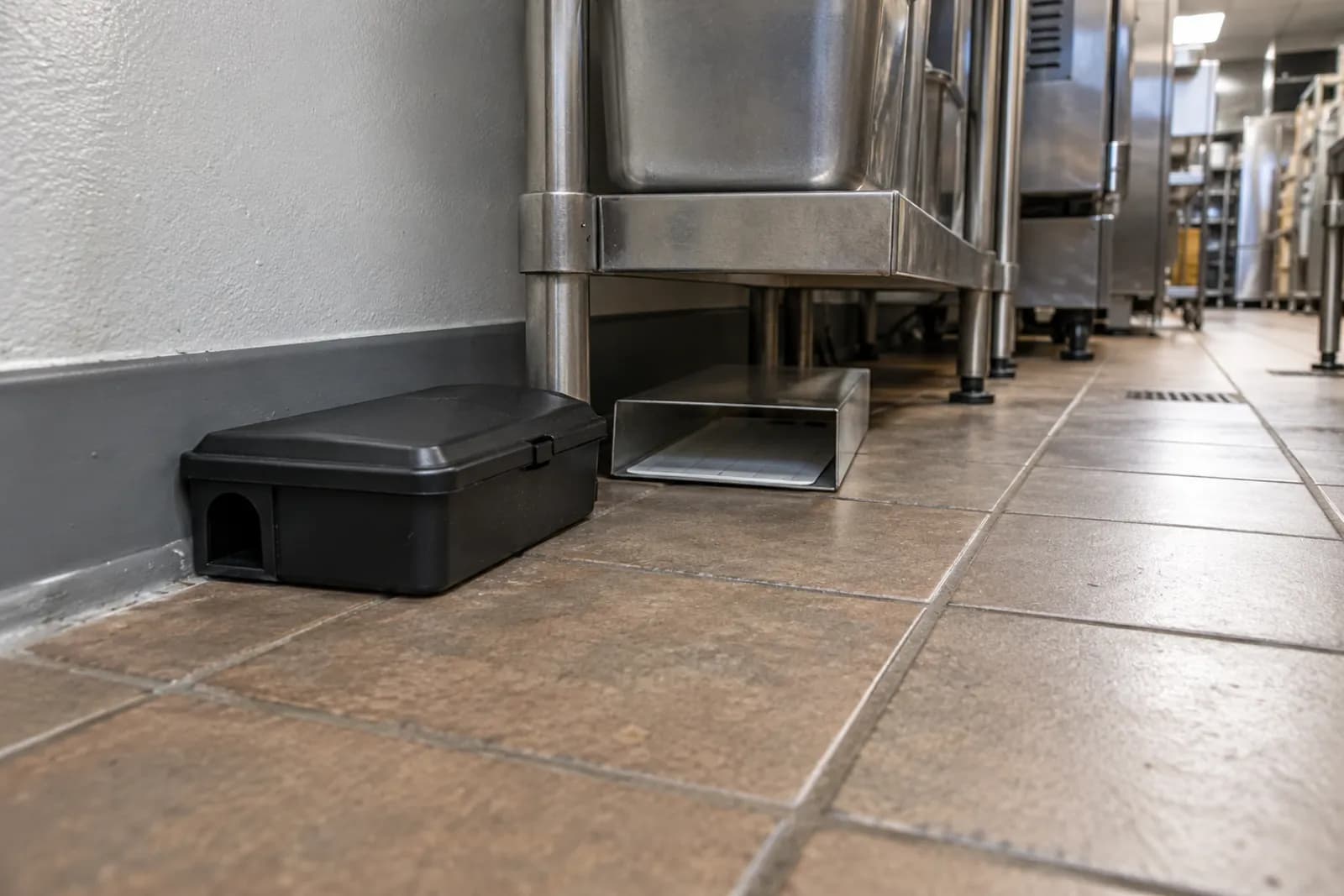
Keeping pests out, signs of an infestation, and working with a licensed operator.
27 questions in the pool, free
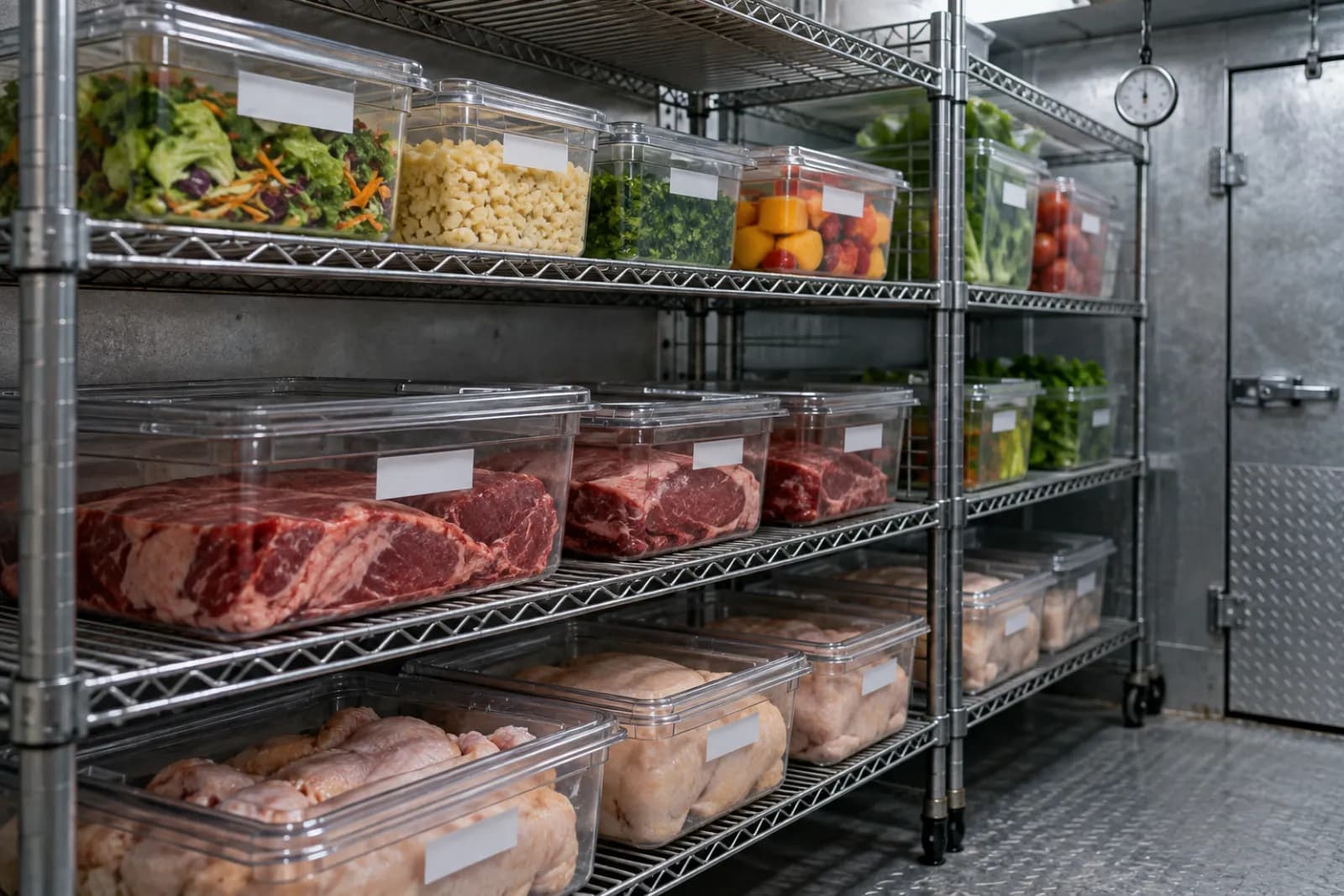
The Food Code, health inspections, priority items, imminent health hazards and reporting duties.
38 questions in the pool, free