ServSafe Manager: Cooling and reheating Questions
The two-stage cooling limits, safe cooling methods and how to reheat food for hot holding.
42 questions in this topic. The quiz draws 20 at a time. Free, with no sign-up.
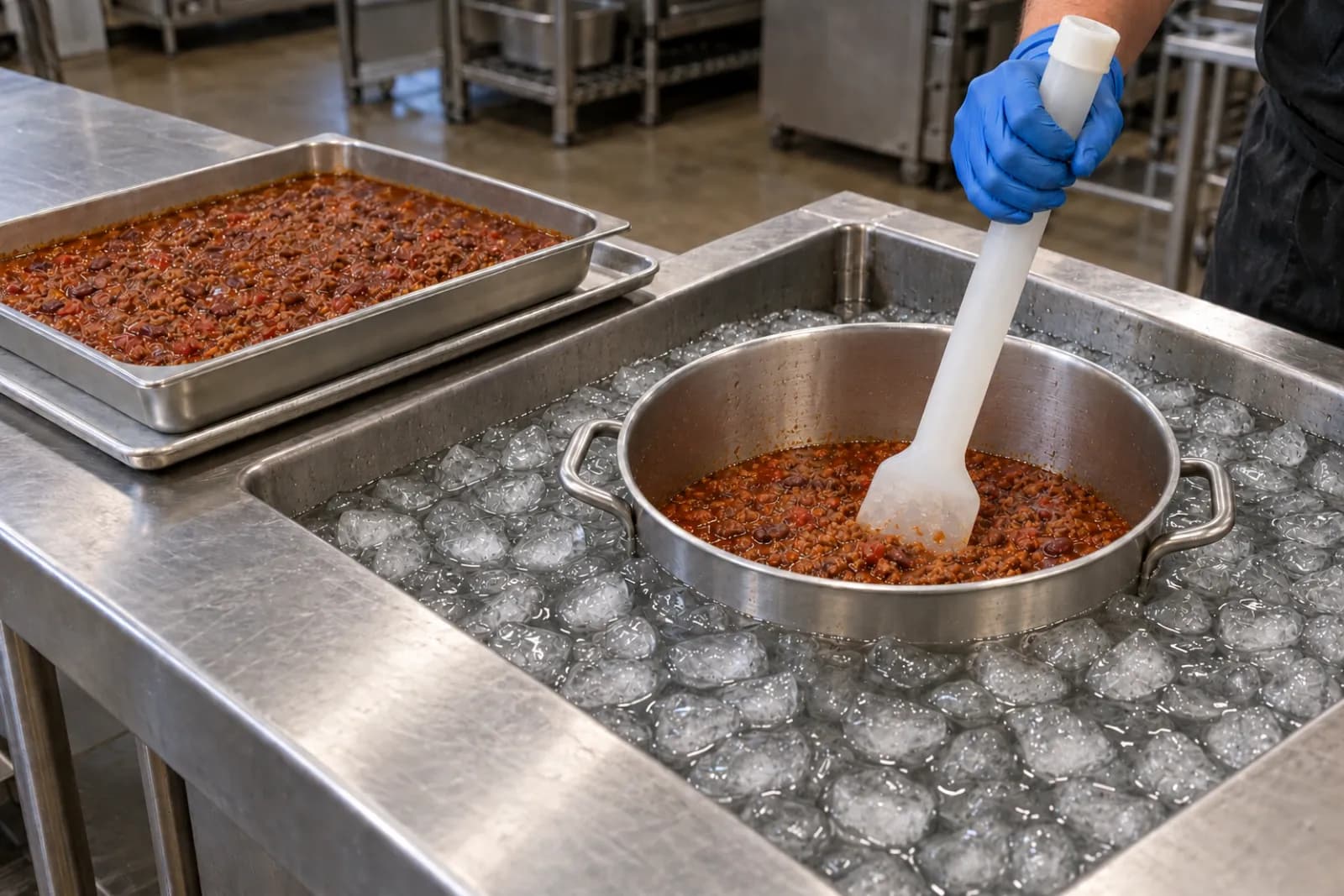
Cooling and reheating practice quiz
- 20 questions · 30 minutes · pass mark 70%
- Answers and explanations are shown at the end, with every question to review.
Key numbers
- 135°F to 70°F: within 2 hours
- 135°F to 41°F: within 6 hours in total
- Food made from room-temperature ingredients, such as canned tuna: 41°F within 4 hours
- Reheating for hot holding: 165°F for 15 seconds, reached within 2 hours
- Commercially packaged ready-to-eat food, reheated for hot holding: 135°F
Source: FDA Food Code 2022, 3-501.14, 3-403.11
What are the rules for cooling food?
Cool cooked TCS food from 135°F to 70°F within 2 hours, then down to 41°F or below. The full drop from 135°F to 41°F can take no more than 6 hours.
10 sample cooling and reheating questions and answers
10 of our 42 questions, with the answer and why.
1. Under the standard two-stage cooling method, what must cooked TCS food reach within the first two hours after 135°F (57°C)?
Answer: 70°F (21°C) or less
- A) 90°F (32°C) or less
- B) 110°F (43°C) or less
- C) 70°F (21°C) or less (correct answer)
- D) 125°F (52°C) or less
Why: The first stage goes from 135°F to 70°F within two hours. 90°F does not meet the first-stage endpoint.
Source: FDA Food Code 2026, 3-501.14
2. Which cooling record does NOT meet the standard first-stage requirement?
Answer: 135°F (57°C) to 80°F (27°C) in two hours
- A) 135°F (57°C) to 69°F (21°C) in two hours
- B) 135°F (57°C) to 80°F (27°C) in two hours (correct answer)
- C) 135°F (57°C) to 70°F (21°C) in 90 minutes
- D) 135°F (57°C) to 65°F (18°C) in 100 minutes
Why: 80°F is above the required 70°F first-stage endpoint. 69°F is below the first-stage endpoint.
Source: FDA Food Code 2026, 3-501.14
3. A large cooked meat portion is cooling too slowly at its centre. Which listed method addresses the mass of the food?
Answer: Separate it into smaller or thinner portions
- A) Combine it with a second hot batch
- B) Separate it into smaller or thinner portions (correct answer)
- C) Place it in a deeper vessel
- D) Insulate its container
Why: Reducing portion size is an expressly listed cooling method. Increasing the mass works against rapid cooling.
Source: FDA Food Code 2026, 3-501.15
4. Standard-cooling food is in a protected cooler location with no overhead contamination risk. Which covering choice supports heat transfer?
Answer: A loose cover, or no cover while adequately protected
- A) A tightly sealed insulating cover for every cooling pan
- B) A loose cover, or no cover while adequately protected (correct answer)
- C) No protection directly beneath a leaking pipe
- D) A used wiping cloth draped onto the food
Why: The rule permits loose covering or protected uncovered cooling. A tight insulating cover can impede heat transfer.
Source: FDA Food Code 2026, 3-501.15
5. A cooked stew will be reheated from cold for hot holding. What time limit applies between 41°F (5°C) and its required reheating endpoint?
Answer: No more than two hours
- A) No more than two hours (correct answer)
- B) Up to six hours
- C) Up to four hours in every case
- D) Until the next meal period regardless of duration
Why: Reheating for hot holding must pass through this range within two hours. The six-hour cooling total is not a reheating allowance.
Source: FDA Food Code 2026, 3-403.11
6. A cook following ordinary two-stage cooling records 135°F (57°C) at 3 p.m. and 75°F (24°C) at 5 p.m. Which checkpoint has failed?
Answer: The first two-hour cooling endpoint
- A) The first two-hour cooling endpoint (correct answer)
- B) Only the six-hour final checkpoint
- C) The four-hour ambient-ingredient rule
- D) No checkpoint because the food became cooler
Why: The food had to reach 70°F or less by 5 p.m. The first-stage failure already occurs at the two-hour mark.
Source: FDA Food Code 2026, 3-501.14
7. Which leftover item may use the special roast time-and-temperature reheating conditions for hot holding?
Answer: A remaining unsliced portion of a qualifying cooked meat roast
- A) Every sliced roast-beef sandwich batch
- B) A remaining unsliced portion of a qualifying cooked meat roast (correct answer)
- C) Any ground-meat casserole
- D) Any soup containing meat pieces
Why: The exception specifically identifies remaining unsliced qualifying roast portions. Sliced portions do not meet the stated unsliced condition.
Source: FDA Food Code 2026, 3-403.11
8. A TCS delivery is received above 41°F (5°C) under a law that expressly permits its shipment temperature. It is not raw shell eggs. What cooling step must follow receipt?
Answer: Cool the food to 41°F (5°C) or less within four hours
- A) Use the ordinary six-hour cooked-food cooling period regardless of the receiving condition
- B) Keep the food indefinitely at its lawful shipment temperature
- C) Cool the food to 41°F (5°C) or less within four hours (correct answer)
- D) Apply only the 45°F (7°C) shell-egg ambient-air rule
Why: This lawful above-41°F (5°C) receiving branch requires reaching 41°F (5°C) or less within four hours. Permission to ship at a higher temperature does not authorize indefinite storage at that temperature.
Source: FDA Food Code 2022, 3-501.14
9. Four batches of cooked soup started cooling at 135°F (57°C). Which batch must be thrown out instead of being reheated and cooled again?
Answer: A batch at 76°F (24°C) three hours into cooling
- A) A batch at 100°F (38°C) one hour into cooling
- B) A batch at 90°F (32°C) one and a half hours into cooling
- C) A batch at 76°F (24°C) three hours into cooling (correct answer)
- D) A batch that reached 70°F (21°C) in two hours and reads 55°F (13°C) at four hours
Why: Food still above 70°F (21°C) more than two hours into cooling must be thrown out. The other batches are still within their cooling times.
Source: FDA Food Code 2022, Annex 5, 7. Assessing Cooling
10. A cooling log shows soup dropping through several temperature ranges. In which range do bacteria grow fastest, so the soup must pass through it quickly?
Answer: 125°F to 70°F (52°C to 21°C)
- A) 41°F to 32°F (5°C to 0°C)
- B) 165°F to 135°F (74°C to 57°C)
- C) 125°F to 70°F (52°C to 21°C) (correct answer)
- D) 70°F to 41°F (21°C to 5°C)
Why: FDA describes 70°F to 125°F (21°C to 52°C) as near ideal for bacterial growth. That is why the first stage requires food to drop from 135°F (57°C) to 70°F (21°C) within two hours.
Source: FDA Food Code 2022, Annex 3, 3-501.14 Cooling
Keep practicing
Cooling limits go with the holding rules, and the ServSafe Manager practice exam page has both quizzes.
Ready for a full paper? Try the free 90-question ServSafe practice test.
Studying for the other exam? Try the Food Handler cooling and reheating quiz.
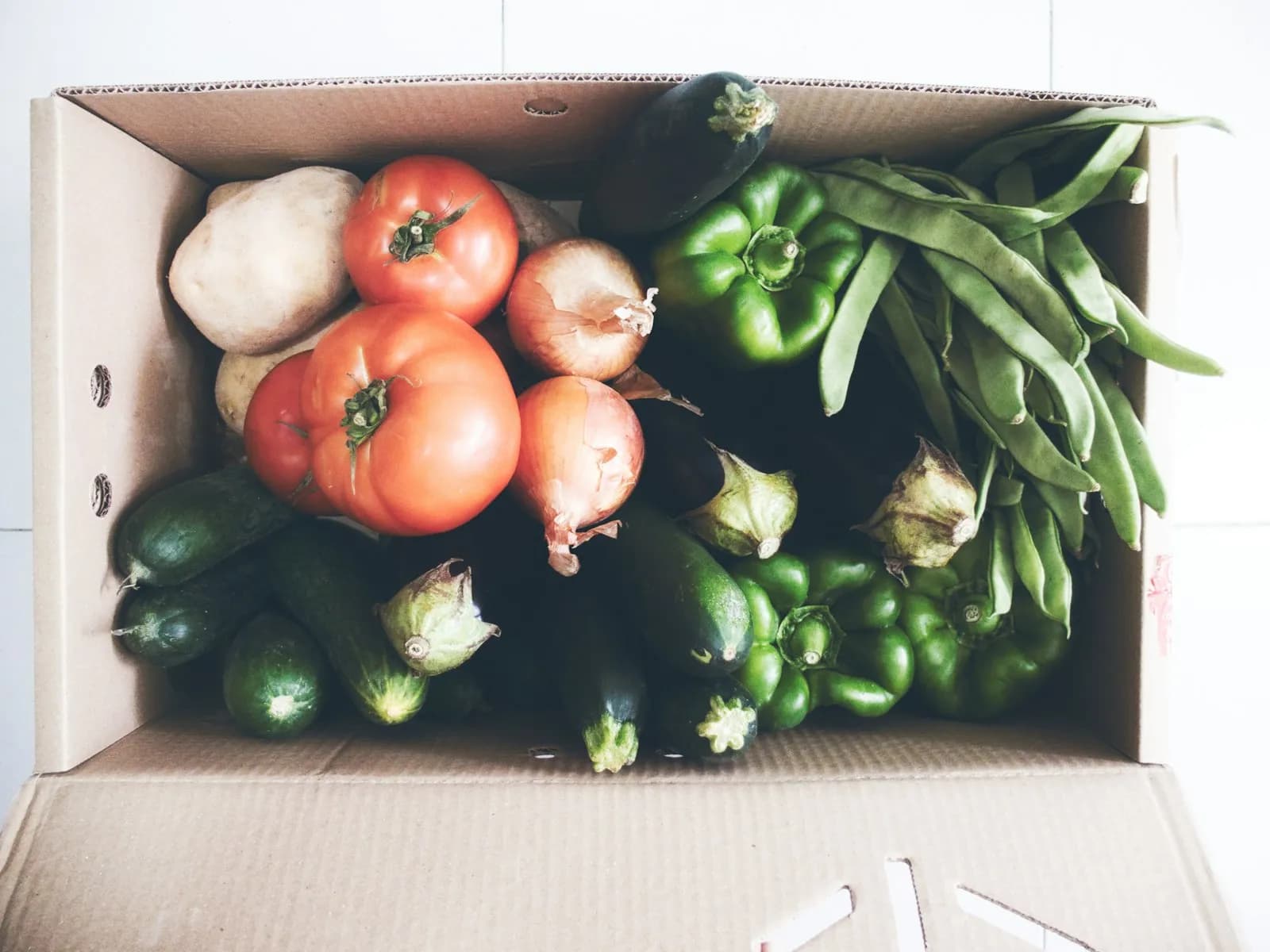
Approved suppliers, checking deliveries, and when to reject a shipment.
42 questions in the pool, free
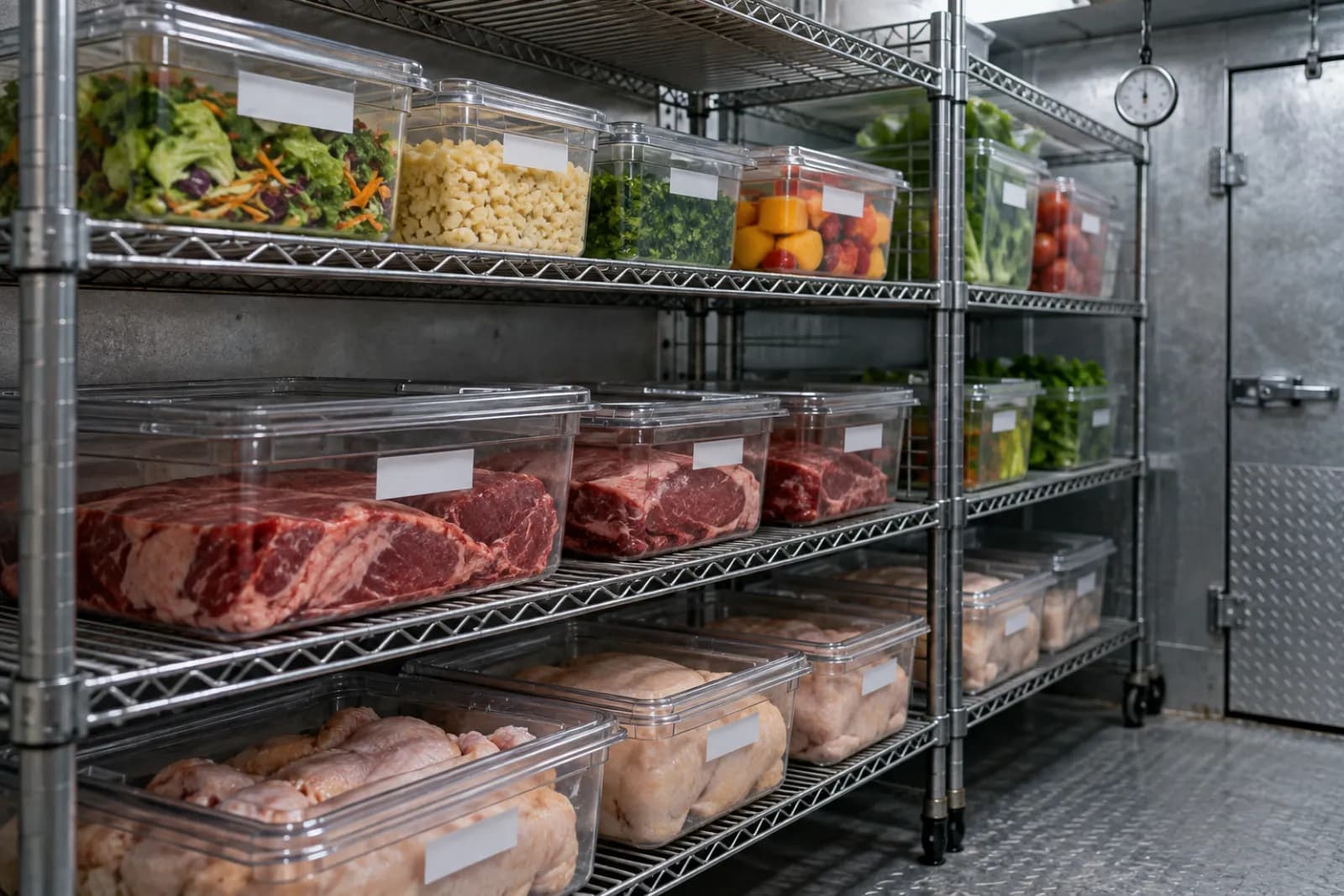
Shelf order, labels, date marking, first in first out and refrigerator and freezer temperatures.
41 questions in the pool, free
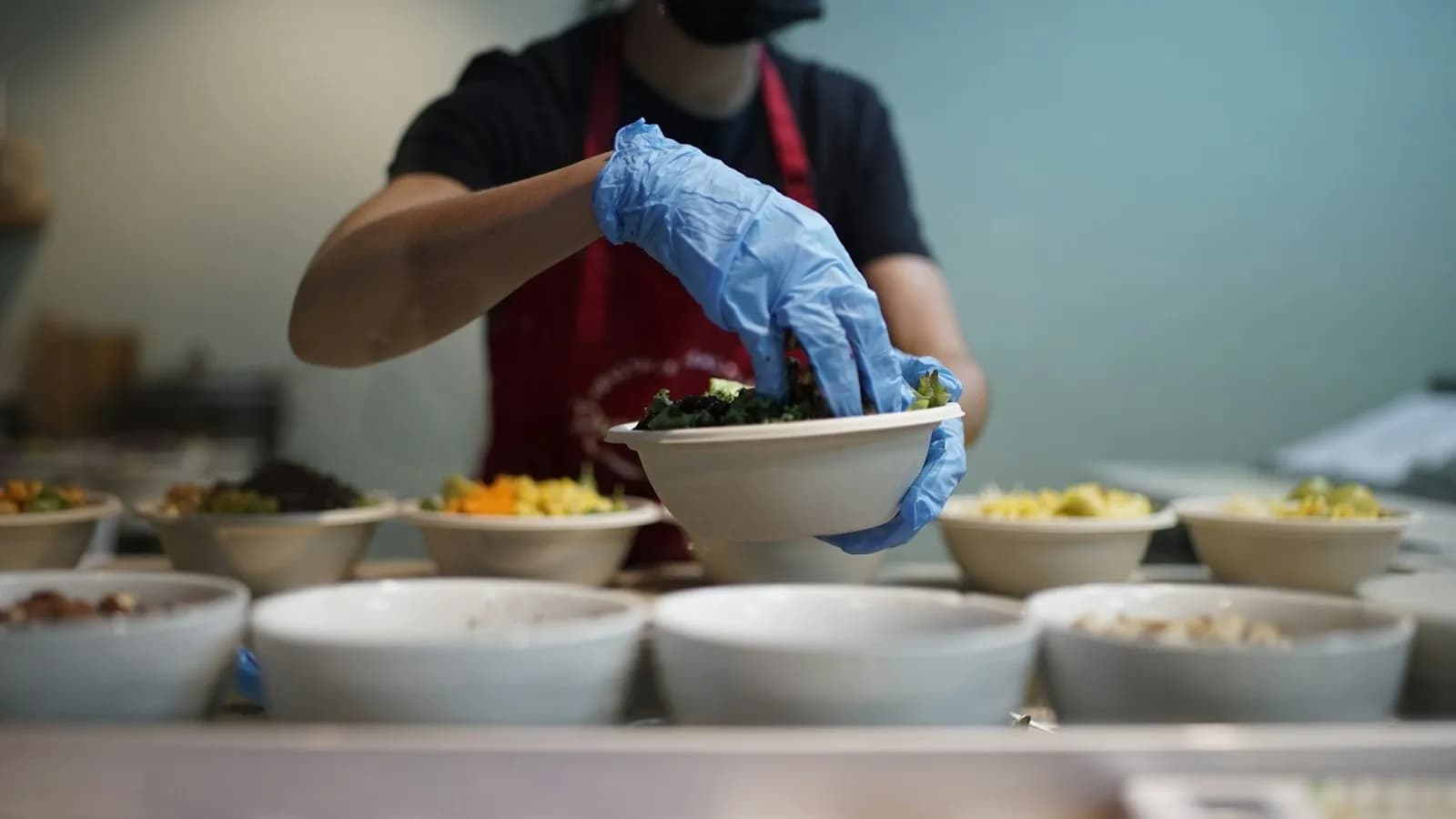
Thawing, washing produce, handling raw food and the steps that need a variance.
44 questions in the pool, free