ServSafe Manager: Food preparation Questions
Thawing, washing produce, handling raw food and the steps that need a variance.
44 questions in this topic. The quiz draws 20 at a time. Free, with no sign-up.
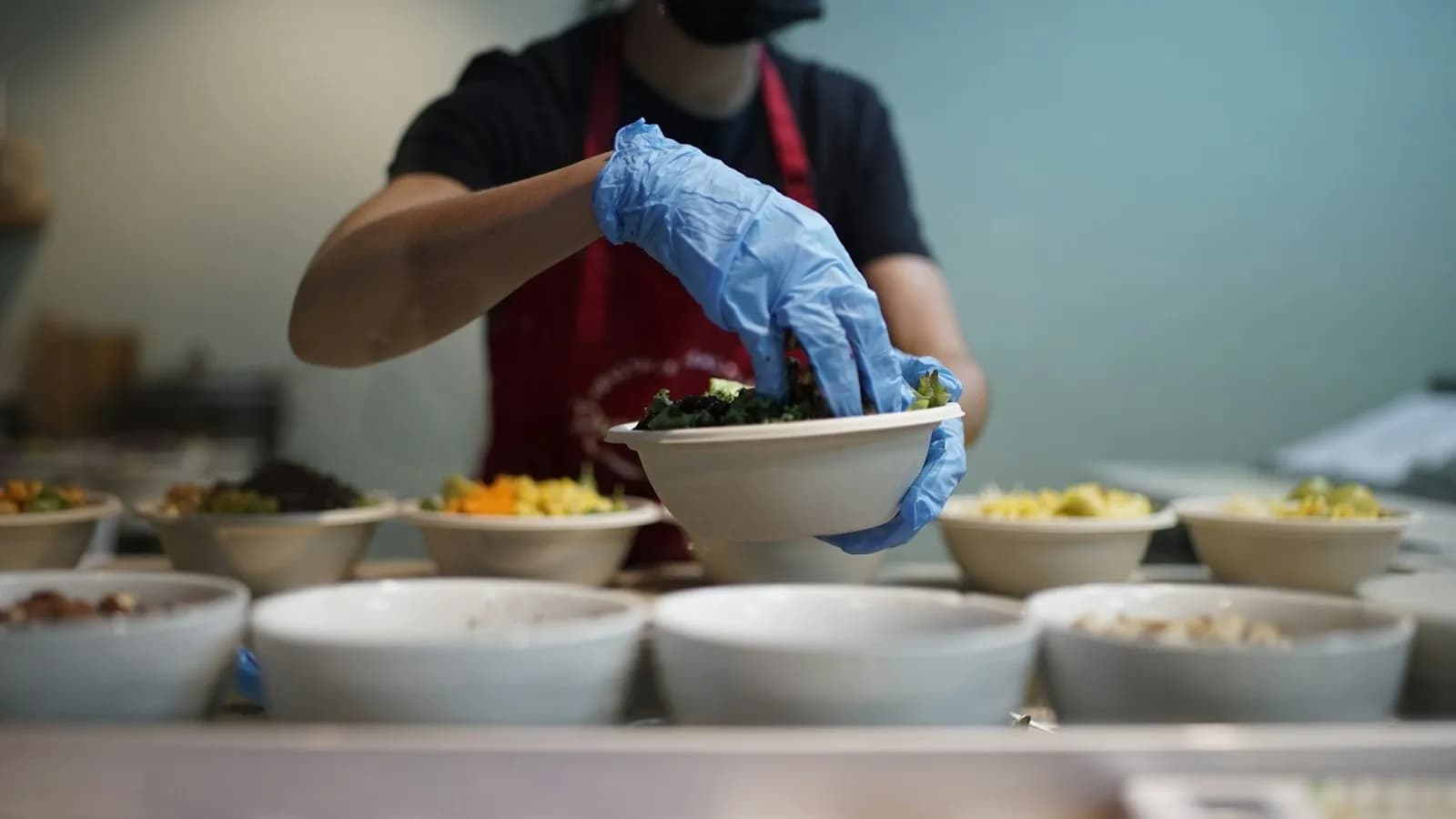
Food preparation practice quiz
- 20 questions · 30 minutes · pass mark 70%
- Answers and explanations are shown at the end, with every question to review.
Key numbers
- Thawing in a refrigerator: food stays at 41°F or below
- Thawing under running water: water at 70°F or below
- Raw animal food thawed under running water: no more than 4 hours above 41°F
- Raw fruits and vegetables: wash before cutting, combining, cooking or serving
- Get a variance before curing food or smoking it to preserve it
Source: FDA Food Code 2022, 3-501.13, 3-302.15, 3-502.11
How do you thaw food safely?
Thaw TCS food in a refrigerator at 41°F or below, fully under running water at 70°F or below, or as part of cooking, including in a microwave if cooking follows right away.
10 sample food preparation questions and answers
10 of our 44 questions, with the answer and why.
1. A cook plans to thaw frozen TCS food overnight under refrigeration. Which food-temperature limit must that method maintain?
Answer: 41°F (5°C) or less
- A) 50°F (10°C) or less
- B) 41°F (5°C) or less (correct answer)
- C) 70°F (21°C) or less
- D) Any temperature if the food still contains a few ice crystals
Why: Refrigerator thawing must maintain the food at or below 41°F. 50°F exceeds the refrigerator-thawing food limit.
Source: FDA Food Code 2026, 3-501.13
2. Raw animal food is thawed under the permitted running-water method and will be cooked. Which time must count toward its four-hour limit above 41°F (5°C)?
Answer: Thawing exposure plus preparation time and any required recooling time
- A) Only the seconds directly under the faucet
- B) Thawing exposure plus preparation time and any required recooling time (correct answer)
- C) Only the time after cooking begins
- D) Only the last hour before service
Why: The raw-food branch counts these related periods rather than just running-water exposure. The rule includes additional preparation or recooling time.
Source: FDA Food Code 2026, 3-501.13
3. A cook moderates the temperature of frozen TCS portions before cooking. Under the slacking alternative, what condition permits a temperature above the refrigeration limit?
Answer: The food remains frozen
- A) The food fully thaws on the counter
- B) The food remains frozen (correct answer)
- C) Only the carton remains cold to touch
- D) A timer is present even though the food warms freely
Why: The slacking rule permits any temperature only while the food remains frozen. Fully thawed counter food no longer meets this alternative.
Source: FDA Food Code 2026, 3-501.12
4. A restaurant generates an allowed produce-wash chemical on site. What governs operation of the generating device?
Answer: The manufacturer's instructions
- A) Whatever setting creates the strongest odour
- B) The manufacturer's instructions (correct answer)
- C) A stronger setting copied from a different device
- D) An operator's guess based on water colour
Why: On-site chemical-generating devices must be used according to those instructions. Odour is not the specified operating direction.
Source: FDA Food Code 2026, 3-302.15
5. A restaurant freezes fish on site for required parasite destruction. What should happen to its freezing records after the fish is served?
Answer: Retain them for 90 calendar days beyond service or sale
- A) Discard them with the empty delivery carton
- B) Keep them only until the fish is plated
- C) Replace them with a general seafood menu
- D) Retain them for 90 calendar days beyond service or sale (correct answer)
Why: The record-retention requirement continues for 90 days after service or sale. An empty carton does not end the retention period.
Source: FDA Food Code 2026, 3-402.12
6. A cook wants to hold an in-use utensil on a clean section of the prep table between tasks. What condition must be built into this storage method?
Answer: Required cleaning and sanitizing of both the utensil and that food-contact table surface
- A) Clean the utensil but never process the table beneath it
- B) Use any dry corner regardless of earlier raw-food contact
- C) Required cleaning and sanitizing of both the utensil and that food-contact table surface (correct answer)
- D) Process only the table while leaving the utensil contaminated
Why: The clean-table route depends on processing both items at their required frequency. The table surface is also part of the stated condition.
Source: FDA Food Code 2022, 3-304.12
7. For juice packaged on site under the treated-juice HACCP route, what percentage reduction is equivalent to the required five-log pathogen reduction?
Answer: 99.999%
- A) 99.999% (correct answer)
- B) 90%
- C) 99%
- D) 99.99%
Why: The provision equates a five-log reduction to 99.999 percent. 90 percent is a one-log reduction rather than the stated five-log target.
Source: FDA Food Code 2022, 3-404.11
8. A parasite-destruction process uses freezing at minus 31°F (minus 35°C) until solid, followed by storage at minus 4°F (minus 20°C) or below. When may the required 24-hour storage stage begin?
Answer: After the fish has first become solid under the minus 31°F (minus 35°C) stage
- A) When the unfrozen fish first enters the freezer, before it becomes solid
- B) Whenever the outside surface feels hard even if the fish has not frozen solid
- C) After moving the solid fish into ordinary 41°F (5°C) refrigeration
- D) After the fish has first become solid under the minus 31°F (minus 35°C) stage (correct answer)
Why: This route requires the fish to freeze solid at minus 31°F (minus 35°C) or below before the 24-hour storage stage. Starting that stage while the fish is still unfrozen would omit the first condition.
Source: FDA Food Code 2022, 3-402.11
9. Which proposed preparation falls outside the specific no-variance cheese reduced-oxygen-packaging branch described in the code?
Answer: Adding fresh herbs in the restaurant to a commercial cheese before packaging it under this branch
- A) Packaging qualifying commercially manufactured hard cheese with no ingredients added
- B) Packaging qualifying commercially manufactured pasteurized process cheese with no ingredients added
- C) Packaging qualifying commercially manufactured semisoft cheese with no ingredients added
- D) Adding fresh herbs in the restaurant to a commercial cheese before packaging it under this branch (correct answer)
Why: The specific cheese branch requires qualifying commercially manufactured cheese with no ingredients added in the establishment. Adding fresh herbs takes that preparation outside this particular branch even if the starting cheese otherwise qualifies.
Source: FDA Food Code 2022, 3-502.12
10. Why does FDA guidance recommend against soaking or submerging fresh produce while washing it?
Answer: Some produce can take in microorganisms during soaking that washing cannot then remove
- A) Soaking removes too many vitamins from the produce
- B) Soaking makes produce-wash chemicals too strong
- C) Soaking is only a concern for produce that will be cooked
- D) Some produce can take in microorganisms during soaking that washing cannot then remove (correct answer)
Why: Some fruits and vegetables can take in microorganisms through stem scars, cracks or cuts when soaked or submerged. Once inside, these pathogens cannot be removed by more washing or sanitizing.
Source: FDA Food Code 2022, Annex 3, 3-302.15 Washing Fruits and Vegetables
Keep practicing
Thawing and produce washing are a small part of the ServSafe Manager test questions on this site.
Ready for a full paper? Try the free 90-question ServSafe practice test.
Studying for the other exam? Try the Food Handler food preparation quiz.
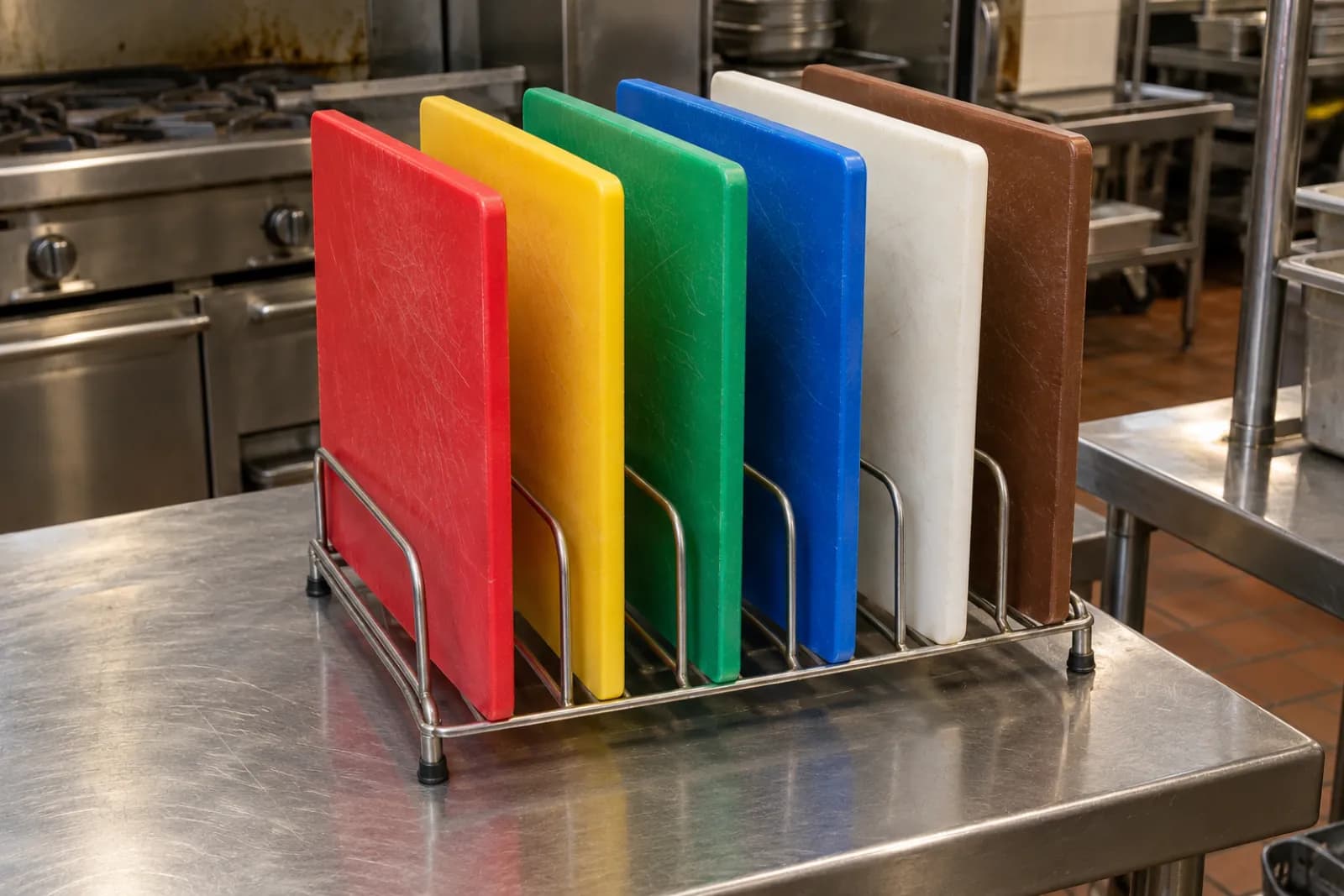
Biological, chemical and physical hazards, and how to keep raw foods and allergens apart from ready-to-eat food.
50 questions in the pool, free
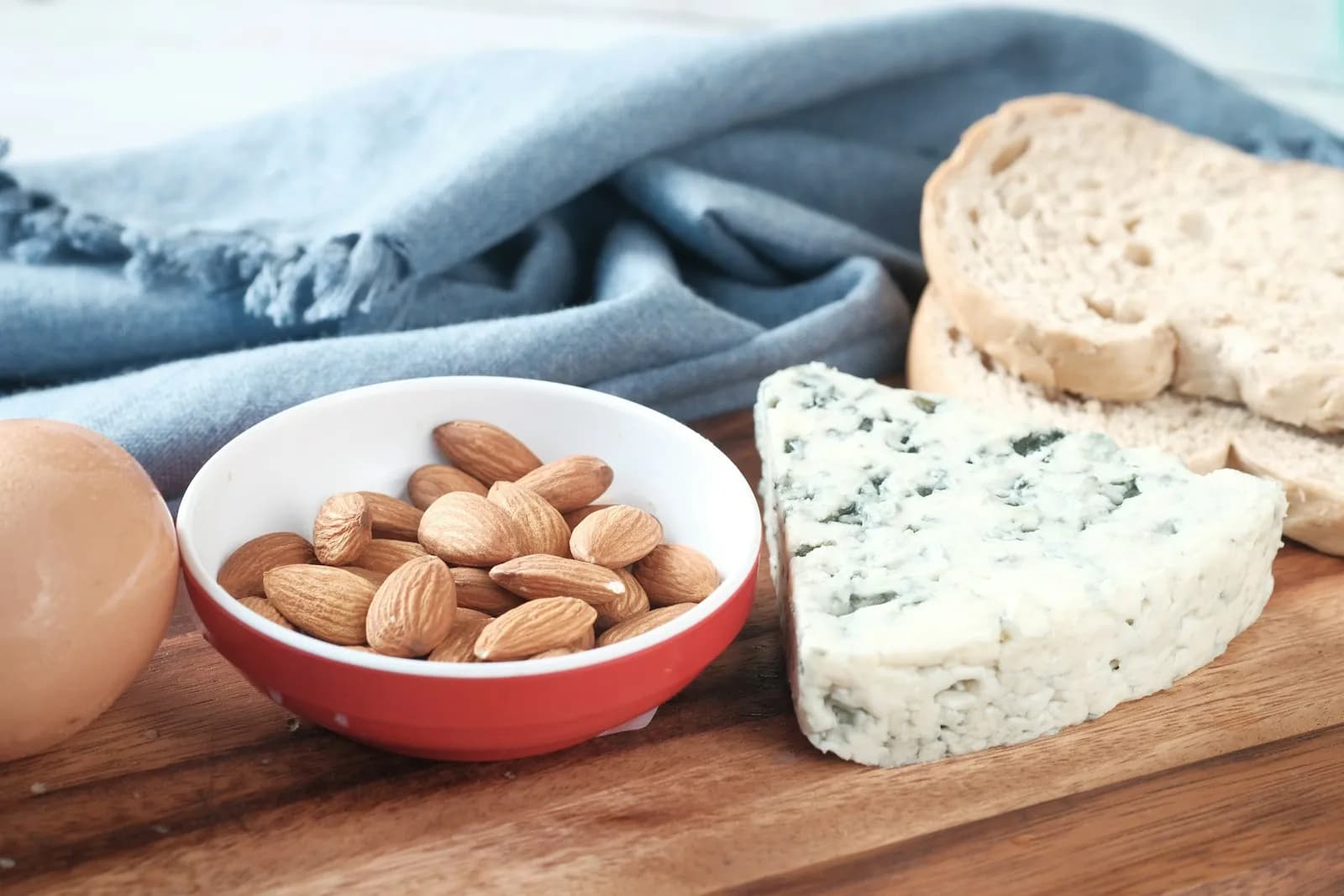
The nine major US allergens, label reading, cross-contact and talking with guests about their allergies.
29 questions in the pool, free
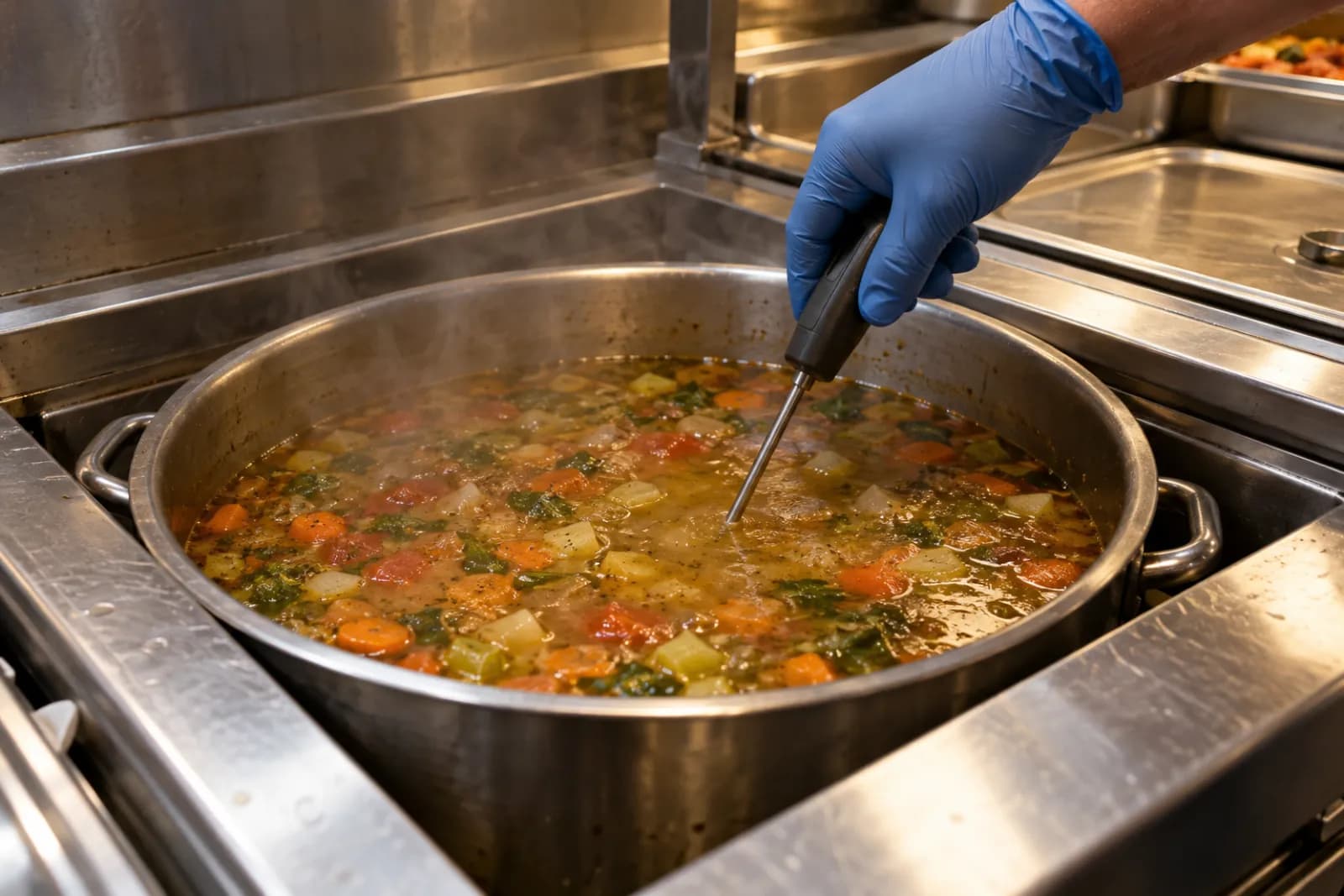
Active managerial control, the seven HACCP principles, critical limits and corrective actions.
67 questions in the pool, free