ServSafe Food Handler Practice Test Answers
These are answers to this site's own practice questions. This site holds no real exam questions or answers.
Use this page to study, not during the real assessment.
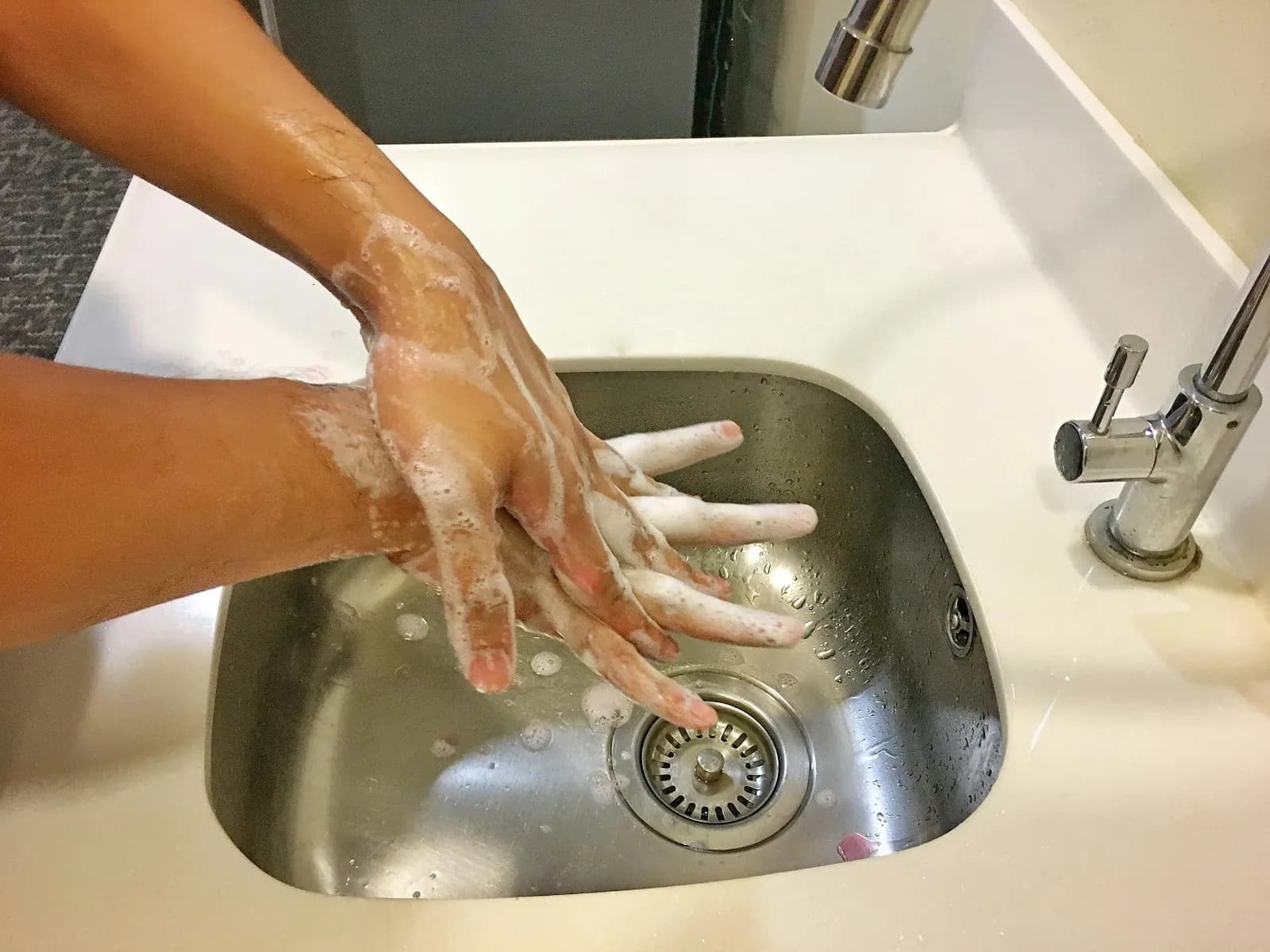
10 of our practice questions, answered
Try each question before you read its answer. Each one shows the reason and the source.
1. A sandwich worker rubs the palms but leaves the spaces between fingers untouched. Which correction addresses the missed part?
- A) Create friction between fingers and over fingertips (correct answer)
- B) Add gloves without changing the washing motion
- C) Rinse only the backs of the hands
- D) Use more paper towels instead of rubbing
Why: Friction must reach fingertips and the spaces between fingers. Adding gloves does not complete an incomplete wash.
Source: FDA Food Code 2026, 2-301.12(B)(3)(b)
2. An employee notices an open, draining boil on the hand with no protective covering. What should the employee do before food work continues?
- A) Handle only cooked foods without telling anyone
- B) Report it to the person in charge so protection and work duties can be addressed (correct answer)
- C) Cover it with a loose paper towel and keep it unreported
- D) Dip the hand into the surface sanitizer and resume prep
Why: An uncovered draining hand lesion is reportable. A loose paper towel does not provide the specified impermeable cover and glove protection.
Source: FDA Food Code 2026, 2-201.11(A)
3. A supplier identifies a fish ingredient specifically as cod. Which allergen source does that name identify?
- A) Tree nuts
- B) Wheat
- C) Egg
- D) Fish (correct answer)
Why: Cod is given as a fish example in the major-allergen definition. Wheat is a separate allergen source.
Source: FDA Food Code 2026, 1-201.10(B), Major food allergen
4. A kitchen makes stuffing containing raw fish. Which cooking target is listed for that stuffing?
- A) 165°F (74°C) throughout, instantaneous (correct answer)
- B) 145°F (63°C) for 15 seconds as for a plain fillet
- C) 135°F (57°C) throughout, instantaneous
- D) 150°F (66°C) for 10 seconds
Why: Stuffing containing fish is in the 165°F (74°C) instantaneous category. The plain-fish method does not apply to this stuffing.
Source: FDA Food Code 2026, 3-401.11(A)(3)
5. A reheating log for ordinary cooked-and-cooled TCS stew shows three hours between 41°F (5°C) and its hot-holding reheating target. What does that log show?
- A) The seven-day date mark overrode the reheating time limit
- B) The two-hour maximum reheating interval was exceeded (correct answer)
- C) The reheating complied because the target was eventually reached
- D) The stew qualified for an extra two hours after it reached 135°F (57°C)
Why: Reheating for hot holding must be rapid, with no more than two hours in the specified interval. Eventually reaching the target does not cure a three-hour interval.
Source: FDA Food Code 2026, 3-403.11(A)
6. Which symptom group is included in CDC's common food-poisoning symptoms list?
- A) Coughing, runny nose and sneezing
- B) Hives, lip swelling and wheezing
- C) Diarrhea, stomach cramps and nausea (correct answer)
- D) Earache, joint stiffness and localized shoulder soreness
Why: CDC lists these gastrointestinal symptoms among the common symptoms of food poisoning. Coughing, a runny nose and sneezing do not match the cited CDC common food-poisoning symptom list.
Source: CDC Food Poisoning Symptoms, Key points
7. After draining and cleaning a refuse unit, a worker prepares it to hold waste again. What should the worker do with its drain opening?
- A) Replace the drain plug (correct answer)
- B) Leave the drain open to let future waste liquid escape
- C) Insert a piece of absorbent paper instead of the plug
- D) Wait until the next pickup before replacing the plug
Why: Refuse-unit drains must have their drain plugs in place. The drain must be plugged rather than used to release waste liquid during storage.
Source: FDA Food Code 2022, 5-501.114
8. Which statement incorrectly excludes a method the model code allows for frozen TCS food?
- A) Frozen food must always be fully thawed before any cooking begins (correct answer)
- B) Frozen food may be thawed as part of a process that cooks it to the required limits
- C) The cooking process must still satisfy the applicable cooking requirements
- D) Cooking from frozen is different from leaving food on a counter to thaw
Why: The model code allows thawing as part of a compliant cooking process. The alternative that permits thawing during a compliant cooking process describes an allowed method.
Source: FDA Food Code 2022, 3-501.13(C)
9. After an employee reports an infected, draining wound on a leg rather than a hand, wrist or exposed arm, which bandage condition is specifically named for that other body area?
- A) A dry, durable, tight-fitting bandage covering the lesion (correct answer)
- B) A damp bandage that remains tightly fitted
- C) A dry dressing that regularly slips away from the wound
- D) A loose cloth laid over the wound under clothing
Why: The other-body-parts condition specifies a dry durable tight-fitting bandage. A damp dressing does not meet the specified dry-bandage condition.
Source: FDA Food Code 2022, 2-201.11(A)(1)(e)(iii)
10. A cooked TCS batch starts cooling at 135°F (57°C) at 1 p.m. At 1:45 p.m., its edge is 65°F (18°C) but its core is 100°F (38°C). Which interpretation should guide the worker's next temperature check?
- A) The edge reading proves the whole batch has completed the first cooling stage
- B) The cool edge does not clear the batch; the hot core must reach 70°F (21°C) by 3 p.m. (correct answer)
- C) Wait until 7 p.m. before checking the core because the total cooling allowance is six hours
- D) The core reading alone proves a cold-holding violation even though the batch is still in its cooling process
Why: Cool outer portions can coexist with a hot core, and the ordinary first stage must reach 70 degrees Fahrenheit within two hours of 135 degrees. A cool outer edge does not establish that the hotter core has reached the first-stage target.
Source: FDA Food Code 2022, Annex 5, Assessing Cooling Time and Temperatures
Keep practicing
Take a free quiz on the ServSafe Food Handler practice test page.