ServSafe Food Handler: Contamination and cross-contact Questions
Biological, chemical and physical hazards, and how to keep raw foods and allergens apart from ready-to-eat food.
50 questions in this topic. The quiz draws 20 at a time. Free, with no sign-up.
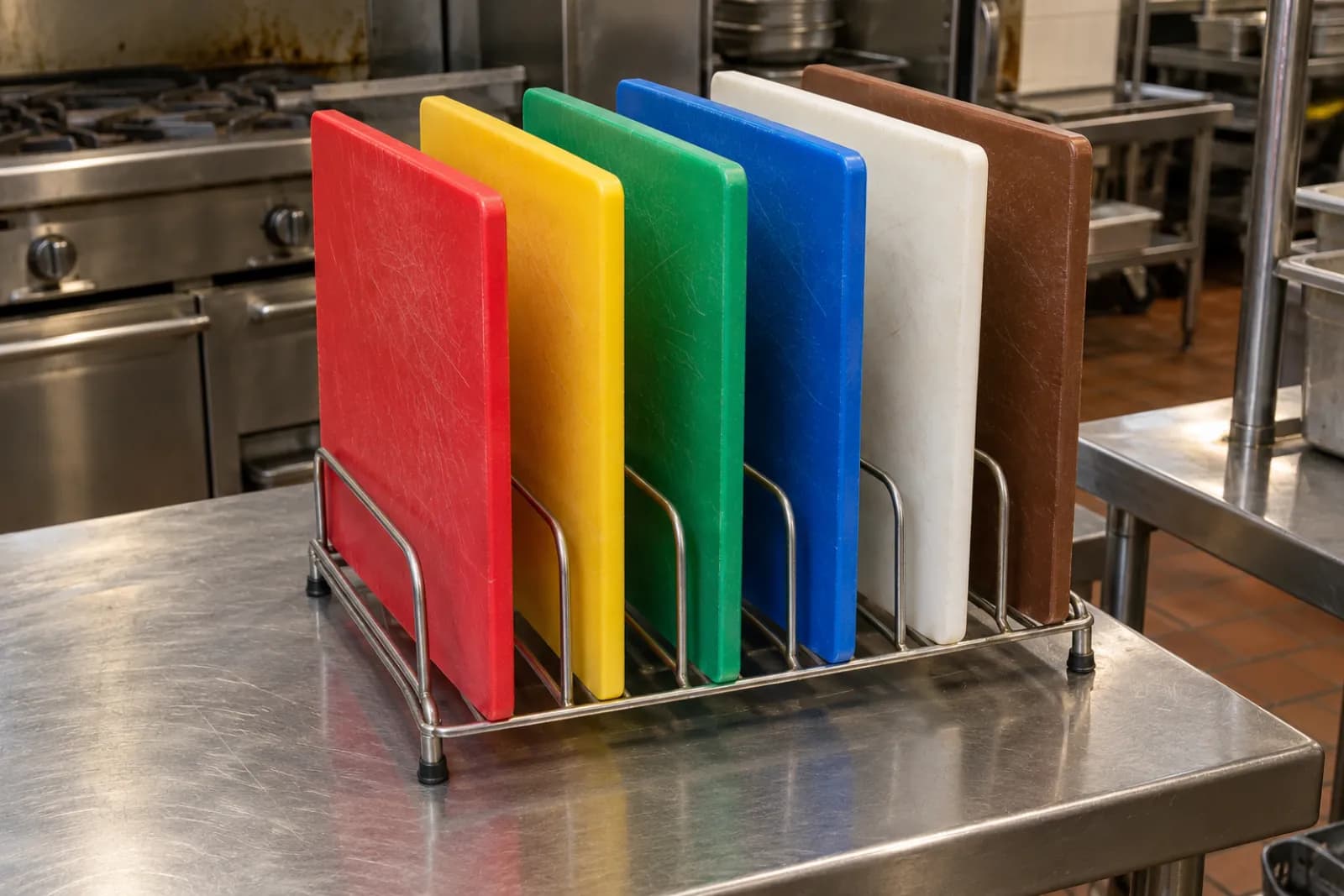
Contamination and cross-contact practice quiz
- 20 questions · 30 minutes · pass mark 75%
- Answers and explanations are shown at the end, with every question to review.
Local requirements and delivery can differ, so check what your state or county asks for.
Key numbers
- Ready-to-eat food: use utensils or gloves, and no bare hands
- Single-use gloves: one task, then discard if damaged, soiled or interrupted
- Keep raw animal food apart from ready-to-eat food
- Cloths for wiping counters: hold in sanitizer between uses
- Store chemicals apart from food and not above it
Source: FDA Food Code 2022, 3-301.11, 3-302.11, 3-304.14, 3-304.15, 7-201.11
10 sample contamination and cross-contact questions and answers
10 of our 50 questions, with the answer and why.
1. A bakery employee is arranging ready-to-eat cookies under ordinary procedures without a bare-hand-contact approval. Which tool provides a suitable handling method?
Answer: Clean tongs
- A) Clean tongs (correct answer)
- B) Freshly washed bare fingers without an approved alternative procedure
- C) A clean bare hand holding only the edge of each cookie
- D) Bare hands after using antiseptic without an approved alternative procedure
Why: Suitable utensils such as tongs avoid bare-hand contact with ready-to-eat food. Washing or using antiseptic does not by itself create a bare-hand-contact approval.
Source: FDA Food Code 2026, 3-301.11(B)
2. One small prep counter must be used for different raw animal-food types. Which scheduling choice supports separation?
Answer: Prepare the types at different times with the required cleaning between uses
- A) Prepare the types at different times with the required cleaning between uses (correct answer)
- B) Pile both types on the counter at the same time
- C) Alternate individual pieces between two types without separation
- D) Leave both types uncovered while moving them around each other
Why: Preparing different types at different times or in separate areas is a listed separation method. Merely alternating pieces does not establish that separation.
Source: FDA Food Code 2026, 3-302.11(A)(2)(c)
3. Outside the listed cooling and other exceptions, how should prepared food be protected while stored?
Answer: Keep it in packages, covered containers, or wrapping
- A) Use a clean lid only when another task is actively occurring above it
- B) Keep it in packages, covered containers, or wrapping (correct answer)
- C) Leave it uncovered whenever the refrigerator door is closed
- D) Cover it only after the first day of storage
Why: The storage provision calls for packages, covered containers or wrappings unless an exception applies. Protection is a routine requirement, not an inspection-day practice.
Source: FDA Food Code 2026, 3-302.11(A)(4)
4. A cloth napkin lines a basket of bread for one guest. What must happen when that basket is refilled for a new guest?
Answer: Replace the liner with a clean one
- A) Turn the used liner over and reuse it
- B) Cover the used liner with a paper menu
- C) Replace the liner with a clean one (correct answer)
- D) Keep the same liner if no crumb is visible
Why: A linen liner must be replaced each time the container is refilled for a new consumer. Lack of visible crumbs does not waive replacement.
Source: FDA Food Code 2026, 3-304.13
5. An untouched but open side salad comes back from a diner's table. What should the server do with it?
Answer: Keep it out of service to another customer
- A) Offer it to the next diner because no bite is missing
- B) Mix it into the fresh salad bowl
- C) Refrigerate it and call it a new portion
- D) Keep it out of service to another customer (correct answer)
Why: Open returned food that has been in a consumer's possession may not be offered again. An untouched appearance does not establish an exception.
Source: FDA Food Code 2026, 3-306.14(A)
6. Why must raw animal food be kept separate from cooked ready-to-eat food during holding as well as preparation?
Answer: The separation requirement covers storage, preparation, holding and display
- A) Only foods currently being cut can transfer contamination
- B) The separation requirement covers storage, preparation, holding and display (correct answer)
- C) Separation stops applying once raw food is chilled
- D) Separation is needed only when foods look different
Why: The code explicitly applies separation during holding as well as other stages. Refrigeration does not remove the raw-to-ready-to-eat separation requirement.
Source: FDA Food Code 2026, 3-302.11(A)(1)
7. During a contamination event, staff consider protecting only the floor directly touched by the spill. Which additional route can spread some foodborne viruses to nearby areas?
Answer: Contaminated droplets moving through the air
- A) Contaminated droplets moving through the air (correct answer)
- B) Only direct visible contact between one food portion and another
- C) Only a change in the refrigerator's temperature setting
- D) No route exists beyond the exact spot visibly touched
Why: The Food Code notes that some foodborne viruses may be transmitted via airborne droplets. Droplet transmission is not limited to food portions directly touching.
Source: FDA Food Code 2022, Annex4,3(A), Biological hazards
8. A water-supply hose is positioned so contaminated liquid could flow backward into the supply. Which contamination pathway must be prevented?
Answer: Backflow from the point of use into the water supply
- A) Normal forward flow from the safe supply toward the outlet
- B) Only a hose leaking outward onto the floor
- C) Only condensation forming on the hose exterior
- D) Backflow from the point of use into the water supply (correct answer)
Why: The plumbing provision requires preventing contaminant backflow into the water supply at points of use. The problem described is reverse contaminant flow rather than ordinary forward supply flow.
Source: FDA Food Code 2022, 5-203.14
9. How can a restaurant protect tableware that is preset before customers arrive, under the ordinary protected-setting route?
Answer: Wrap, cover or invert the tableware
- A) Lay the tableware face up and rely only on its earlier sanitizing
- B) Wrap, cover or invert the tableware (correct answer)
- C) Put a napkin beneath each uncovered item but leave its contact surfaces exposed
- D) Leave all settings exposed because no customer has sat down yet
Why: Preset tableware must be protected by wrapping, covering or inverting it unless the specified exposed-setting exception is used. Earlier sanitizing does not provide ongoing protection for an exposed preset item.
Source: FDA Food Code 2022, 4-904.13(A)
10. In ordinary restaurant service outside the highly susceptible-population exceptions, which non-TCS condiment arrangement can qualify for re-service from one customer to another?
Answer: Protected dispensing from a narrow-neck bottle that is closed between uses
- A) Any open condiment bowl that still looks untouched
- B) Any refrigerated TCS sauce returned in a closed container
- C) Protected dispensing from a narrow-neck bottle that is closed between uses (correct answer)
- D) Any shared sauce container regardless of customer contact
Why: The exception includes protected dispensing of non-TCS food from a container closed between uses. An untouched appearance does not establish the stated protected closed-container exception.
Source: FDA Food Code 2022, 3-306.14(B)(1)
Keep practicing
Keeping raw food away from ready-to-eat food comes up in more than one topic, so try more food handler test questions next.
Want a full 40-question paper? It is on the Food Handler Plan, $2.99 a month. compare the three monthly plans.
Studying for the other exam? Try the Manager contamination and cross-contact quiz.
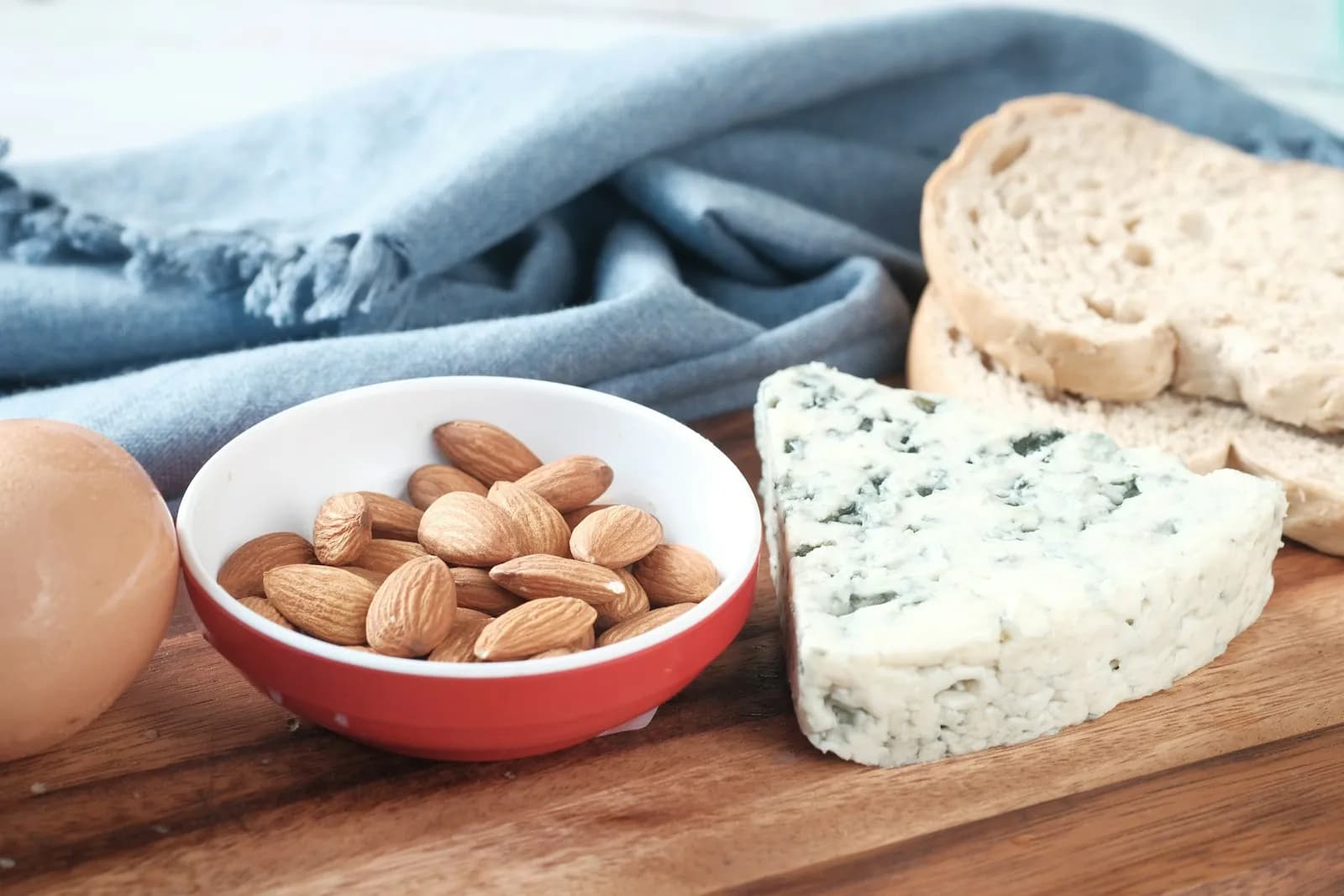
The nine major US allergens, label reading, cross-contact and talking with guests about their allergies.
27 questions in the pool, free
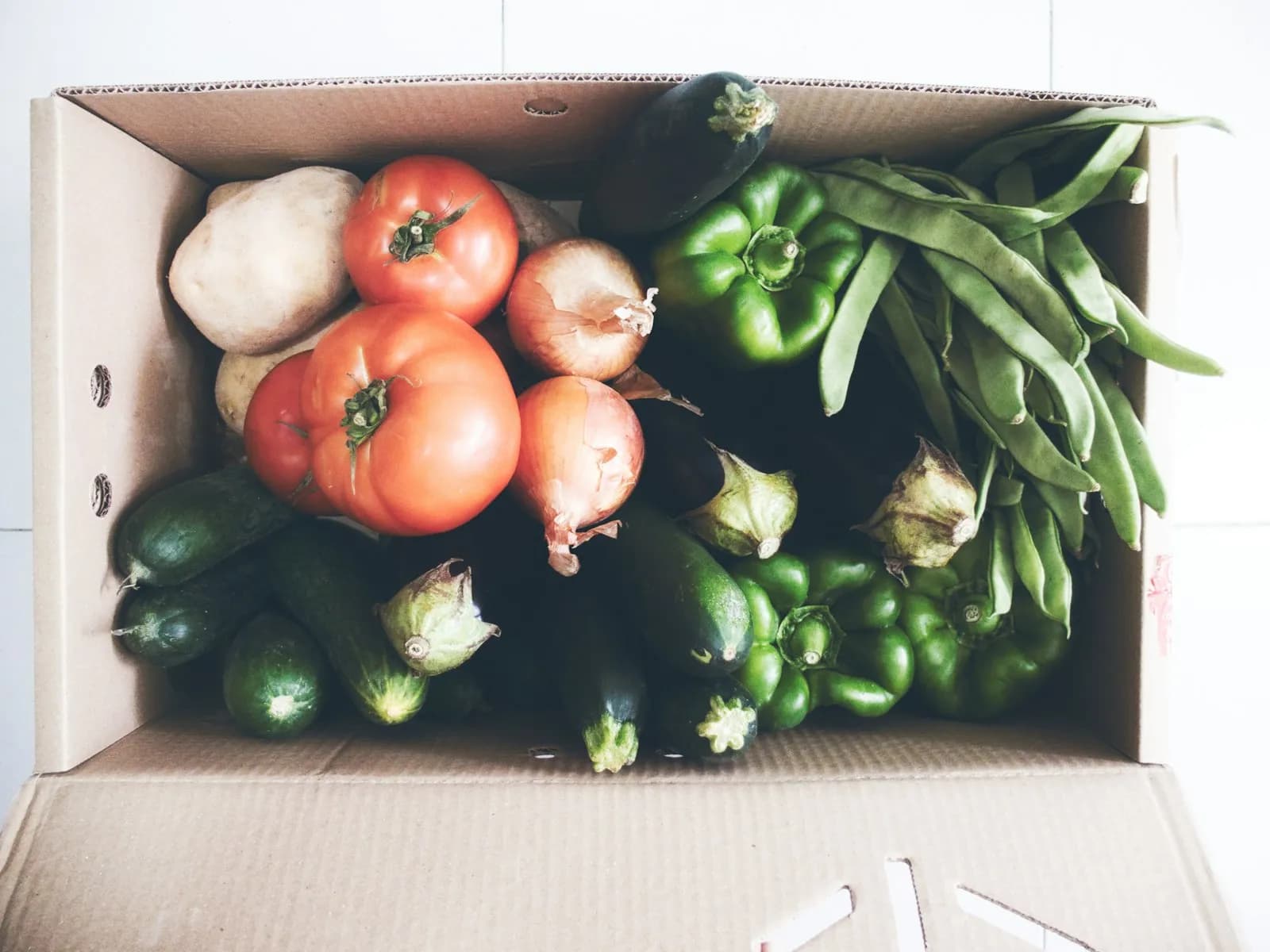
Approved suppliers, checking deliveries, and when to reject a shipment.
20 questions in the pool, free
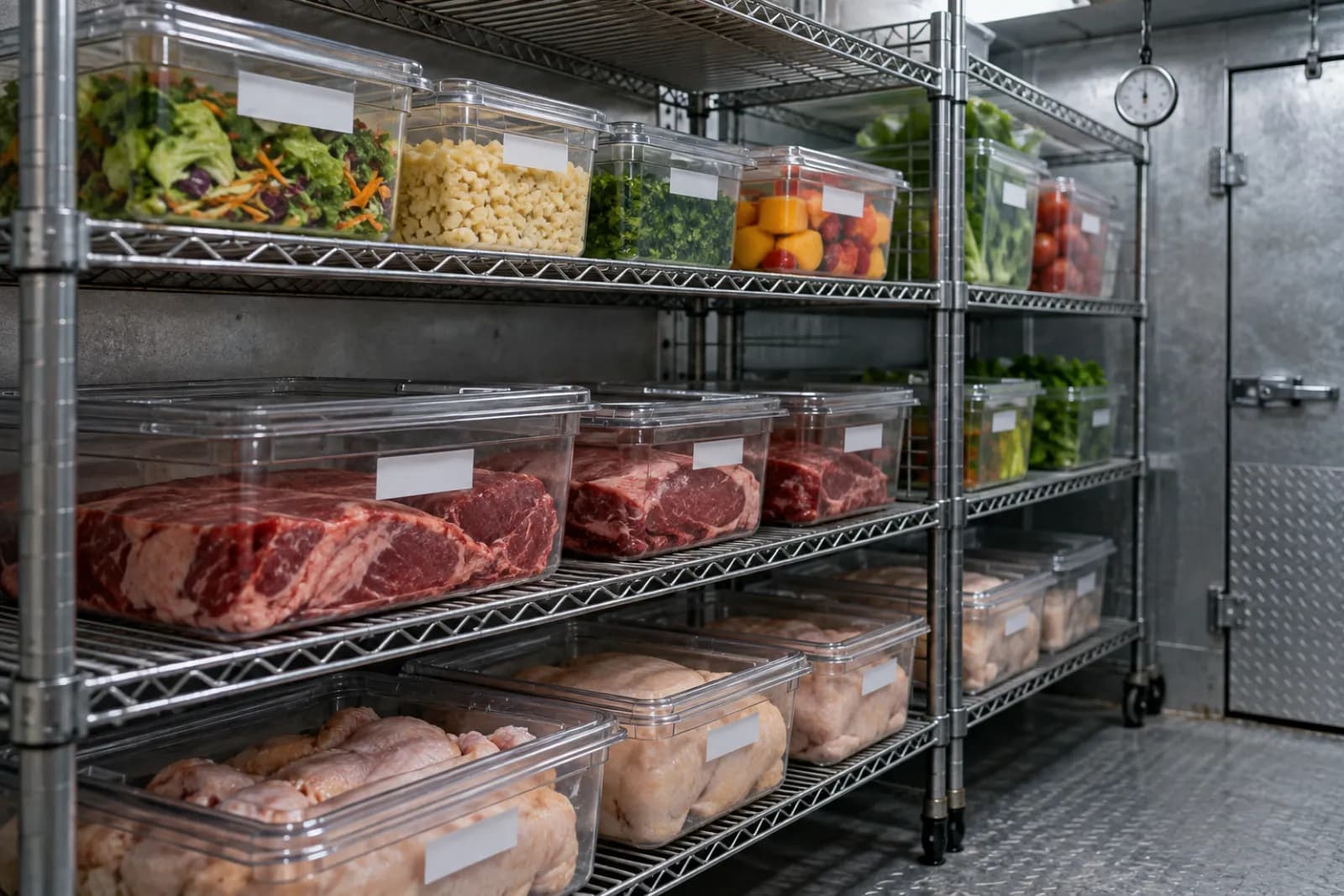
Shelf order, labels, date marking, first in first out and refrigerator and freezer temperatures.
15 questions in the pool, free