ServSafe Food Handler: Food storage Questions
Food storage on a food handler's shift comes down to three things: where food sits, how cold it stays and how it is labeled.
15 questions in this topic. The quiz draws 15 at a time. Free, with no sign-up.
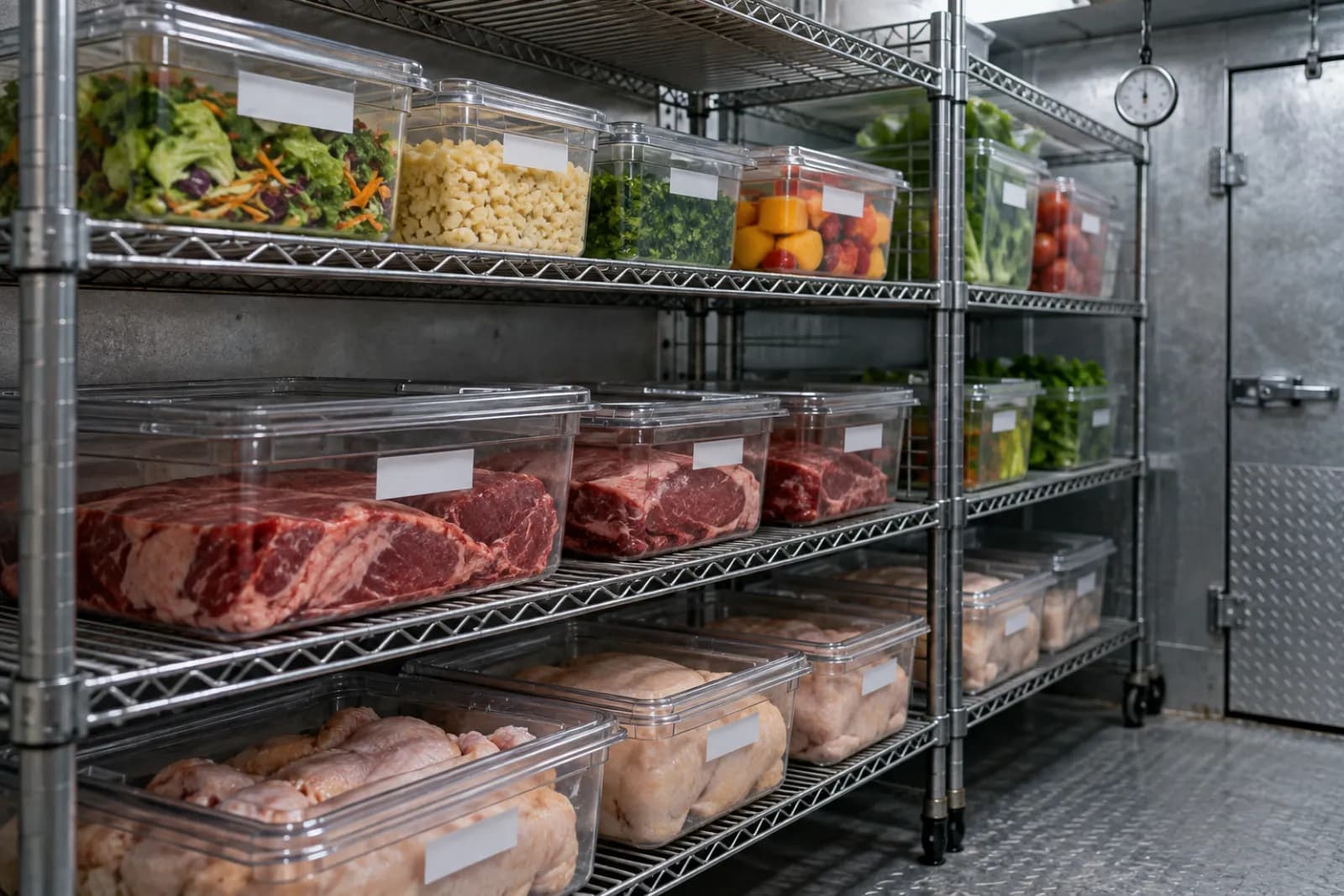
Food storage practice quiz
- 15 questions · 30 minutes · pass mark 75%
- Answers and explanations are shown at the end, with every question to review.
Local requirements and delivery can differ, so check what your state or county asks for.
What a food handler must do
- Keep stored food at least 6 inches above the floor.
- Keep cold food at 41°F or below.
- Date mark ready-to-eat food held at 41°F or below. It can be kept 7 days at most, and the day you make it counts as Day 1.
- When you take ingredients out of their package, label the new container with the food's common name.
Source: FDA Food Code 2022, 3-302.12, 3-305.11, 3-501.16, 3-501.17
5 sample food storage questions and answers
5 of our 15 questions, with the answer and why.
1. A worker stores bags of flour on a standard stationary shelf in a clean, dry room. What minimum shelf clearance is required when no floor-storage exception applies?
Answer: 6 inches (15 cm) above the floor
- A) 1 inch (2.5 cm) above the floor
- B) 2 inches (5 cm) above the floor
- C) Directly on the clean floor
- D) 6 inches (15 cm) above the floor (correct answer)
Why: Ordinary food storage needs at least 6 inches (15 cm) of floor clearance. A clean room does not remove that clearance requirement outside the stated exceptions.
Source: FDA Food Code 2026, 3-305.11(A)
2. After clean utensils are properly arranged for draining, what additional orientation or barrier is specified for storage?
Answer: Keep them covered or inverted
- A) Keep their contact surfaces face up without any cover
- B) Place only a towel underneath their exposed food-contact surfaces
- C) Cover the handles only while leaving food-contact surfaces exposed upward
- D) Keep them covered or inverted (correct answer)
Why: Clean equipment and utensils must be stored covered or inverted in addition to the other storage conditions. Face-up uncovered storage does not provide the specified barrier or orientation.
Source: FDA Food Code 2022, 4-903.11(B)
3. Which pair meets the specific frozen-storage exception that allows raw animal food to be stored with or above ready-to-eat food?
Answer: Both foods are frozen, commercially processed and packaged
- A) The raw food is thawed but commercially packaged, while the RTE food is frozen and commercially packaged
- B) The raw food is an unwrapped kitchen-prepared frozen portion, while the RTE food is frozen and commercially packaged
- C) Both foods are frozen, commercially processed and packaged (correct answer)
- D) The raw food is frozen and commercially packaged, while the RTE food is refrigerated but not frozen
Why: The exception requires the stated frozen commercially processed and packaged condition for both food categories. The thawed raw food no longer meets the frozen condition of this exception.
Source: FDA Food Code 2022, 3-302.11(A)(1)(d)
4. Which unpackaged food should NOT sit directly in ice that is not drained (ice sitting in its own meltwater)?
Answer: Sliced cooked ham
- A) Celery and carrot sticks
- B) Whole raw apples
- C) Cut raw potatoes
- D) Sliced cooked ham (correct answer)
Why: Unpackaged food generally may not sit in undrained ice. Whole raw fruits and vegetables and cut raw vegetables such as celery, carrot sticks or cut potatoes are the listed exceptions, so cooked ham must be kept out of the ice or packaged.
Source: FDA Food Code 2022, 3-303.12(B)
5. Ingredients have been moved from their original packages into working containers. Which container may go without a common-name label?
Answer: A clear bin of dry spaghetti
- A) A clear bin of dry spaghetti (correct answer)
- B) A bin of white granulated sugar
- C) A squeeze bottle of clear cooking oil
- D) A shaker of fine white seasoning
Why: Working containers need the food's common name unless the food is readily and unmistakably recognized, such as dry pasta. Sugar, oil and fine seasonings can be confused with look-alikes.
Source: FDA Food Code 2022, 3-302.12
Keep practicing
Storage rules connect to holding and cooling, and you can find those ServSafe Food Handler practice questions too.
Want a full 40-question paper? It is on the Food Handler Plan, $2.99 a month. compare the three monthly plans.
Studying for the other exam? Try the Manager food storage quiz.
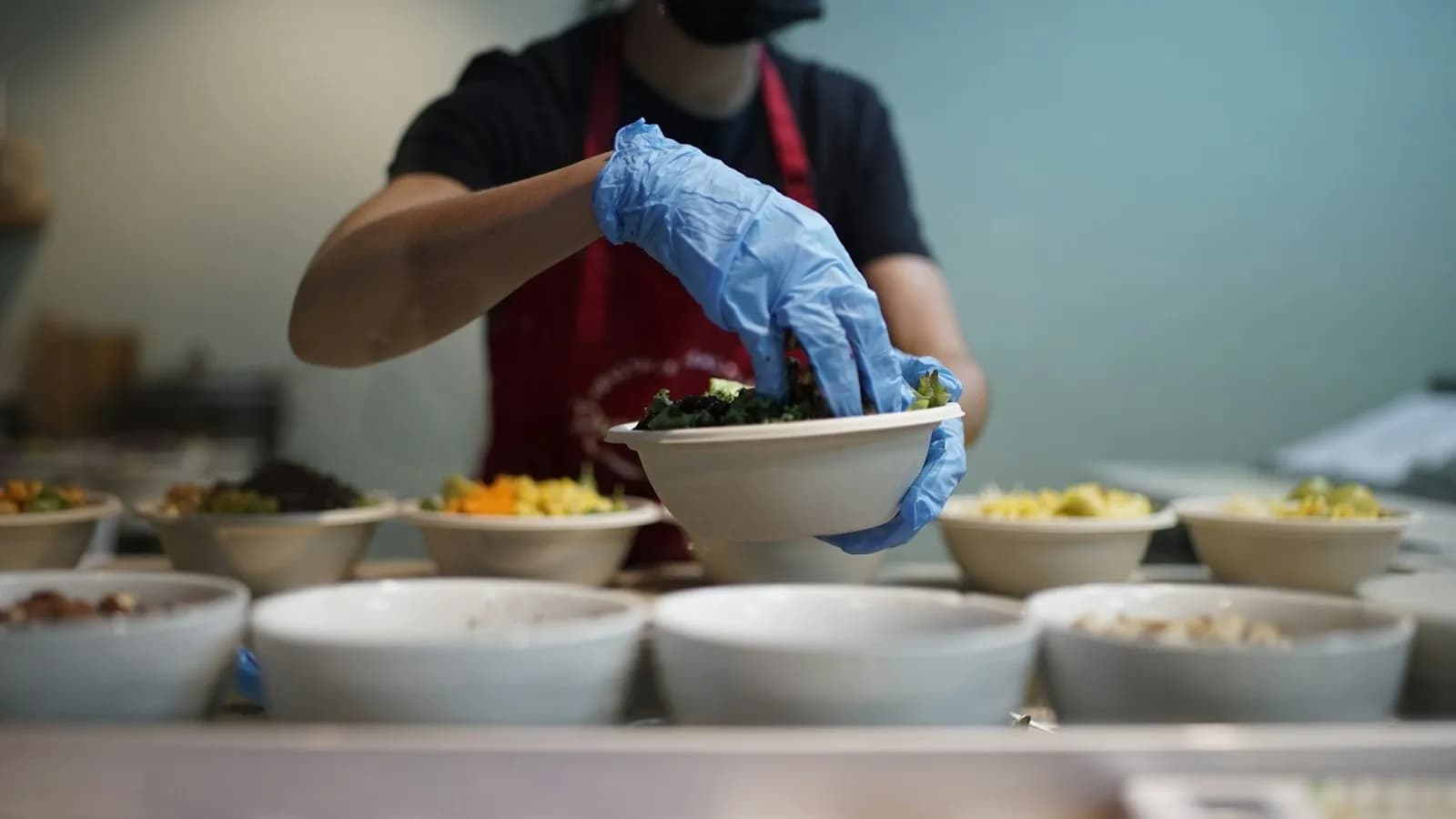
Thawing, washing produce, handling raw food and the steps that need a variance.
16 questions in the pool, free
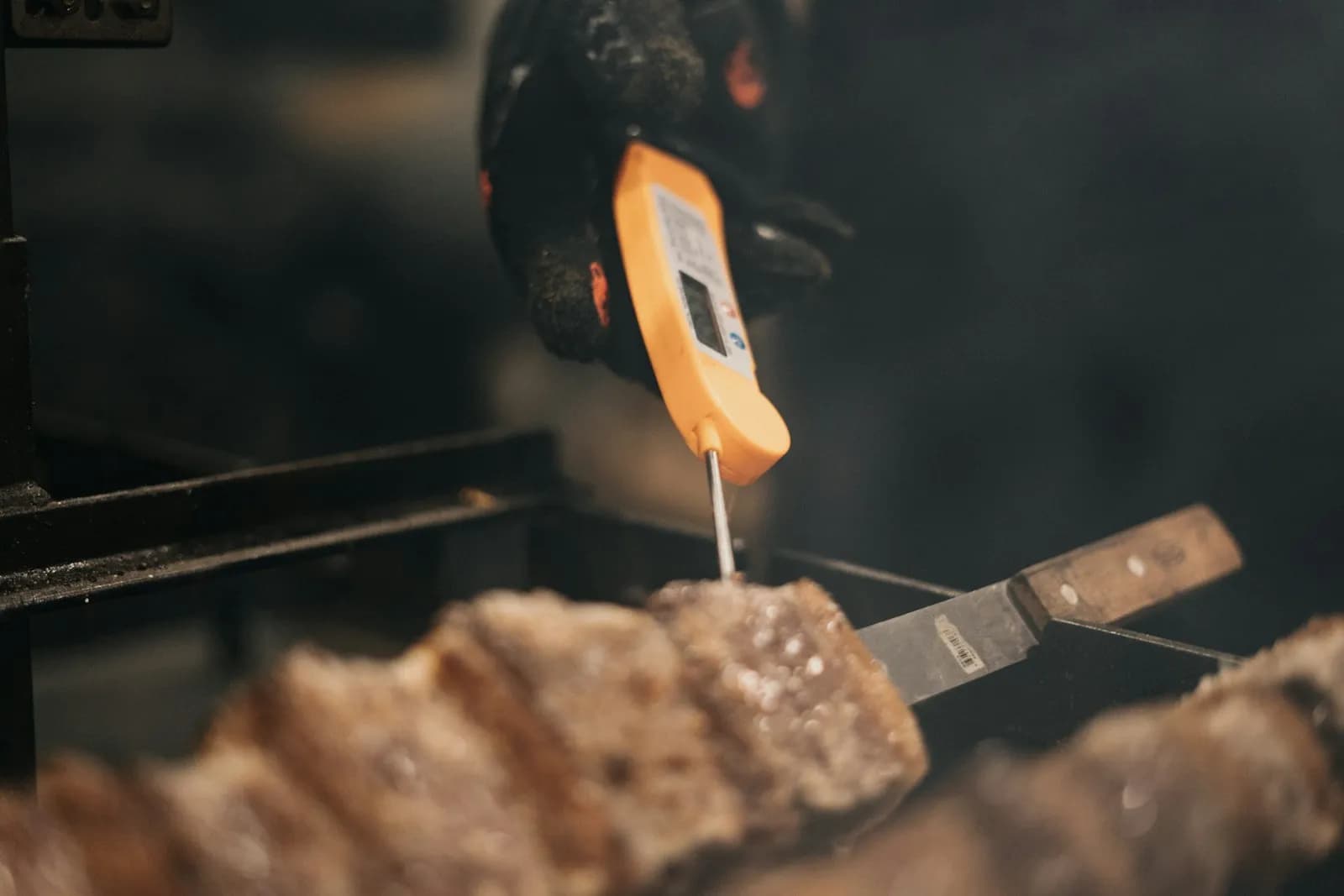
Minimum internal temperatures and hold times for meat, poultry, seafood and eggs.
19 questions in the pool, free
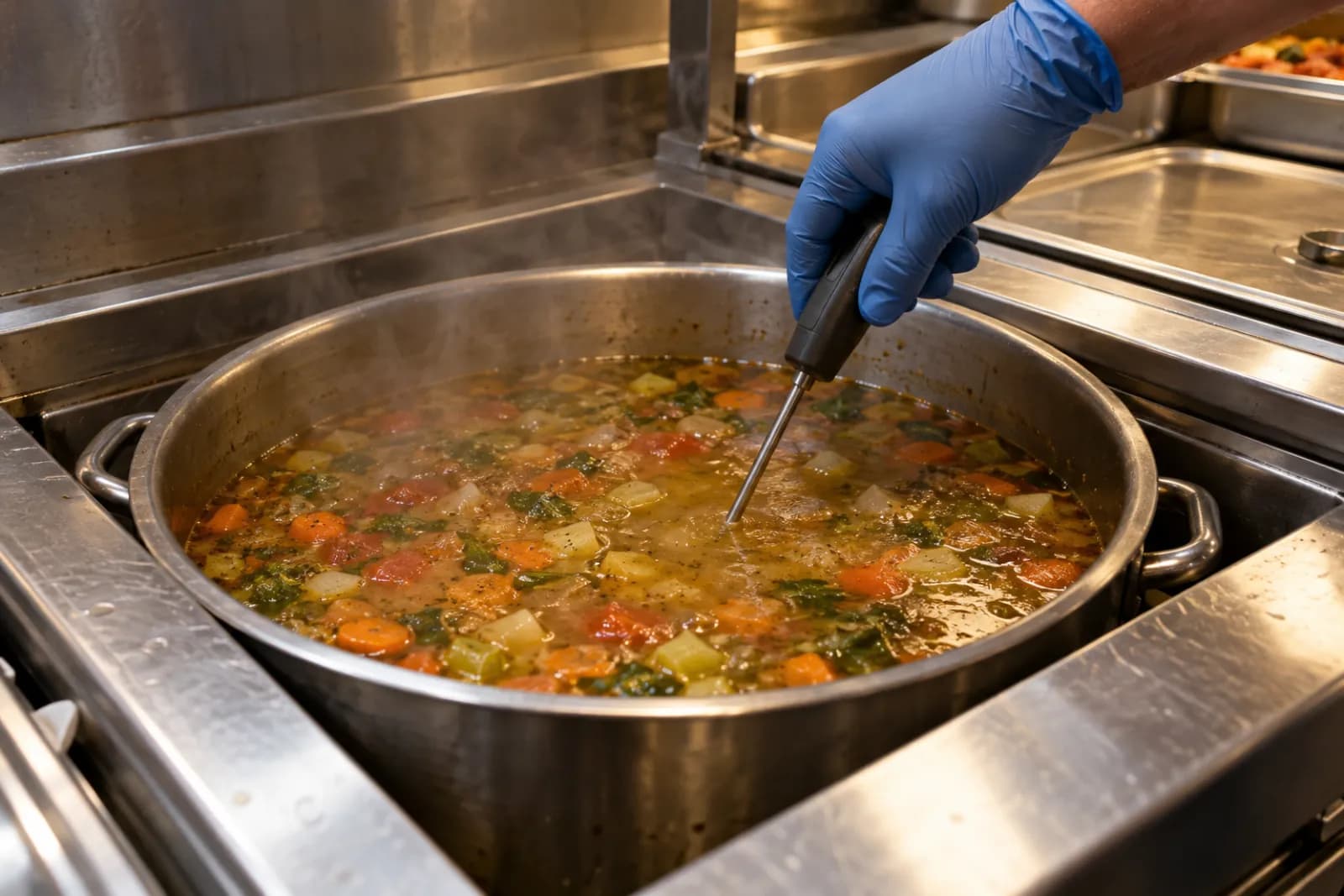
Keeping food out of the temperature danger zone on hot and cold holding lines, and using time as a control.
25 questions in the pool, free