ServSafe Food Handler: Foodborne illness Questions
The germs behind foodborne illness, their symptoms, the foods they travel in and who is most at risk.
43 questions in this topic. The quiz draws 20 at a time. Free, with no sign-up.
Foodborne illness practice quiz
- 20 questions · 30 minutes · pass mark 75%
- Answers and explanations are shown at the end, with every question to review.
Local requirements and delivery can differ, so check what your state or county asks for.
Key numbers
- Tell the person in charge about vomiting, diarrhea, jaundice, sore throat with fever, or an infected wound that is open or draining
- Also report a diagnosis of norovirus, hepatitis A, Shigella, Shiga toxin-producing E. coli, typhoid fever or Salmonella
- Back to work after vomiting or diarrhea with no diagnosis: at least 24 hours without symptoms, or a health practitioner's note saying the cause is not infectious
Source: FDA Food Code 2022, 2-201.11, 2-201.13
10 sample foodborne illness questions and answers
10 of our 43 questions, with the answer and why.
1. A prep employee vomits before the opening shift and thinks the cause is unknown. What should the employee tell the person in charge?
Answer: Report the vomiting before starting food work
- A) Keep the information private until the next staff meeting
- B) Report the vomiting before starting food work (correct answer)
- C) Say nothing unless another employee also vomits
- D) Report only after touching ready-to-eat food
Why: Vomiting is a reportable symptom, so the person in charge needs the information before work begins. A second sick employee is not needed to trigger reporting.
Source: FDA Food Code 2026, 2-201.11(A)
2. Which change in appearance is among the Food Code's employee illness symptoms that must be reported?
Answer: Jaundice
- A) Tiredness after working a double shift
- B) Dry skin without a draining lesion
- C) Mild muscle soreness after lifting boxes
- D) Jaundice (correct answer)
Why: Jaundice is specifically listed as a reportable symptom. Dry skin without a draining lesion is not the appearance change named by that provision.
Source: FDA Food Code 2026, 2-201.11(A)
3. An employee notices an open, draining boil on the hand with no protective covering. What should the employee do before food work continues?
Answer: Report it to the person in charge so protection and work duties can be addressed
- A) Handle only cooked foods without telling anyone
- B) Report it to the person in charge so protection and work duties can be addressed (correct answer)
- C) Cover it with a loose paper towel and keep it unreported
- D) Dip the hand into the surface sanitizer and resume prep
Why: An uncovered draining hand lesion is reportable. A loose paper towel does not provide the specified impermeable cover and glove protection.
Source: FDA Food Code 2026, 2-201.11(A)
4. An excluded employee may have contaminated a tray of ready-to-eat sandwiches before leaving. What should happen to the affected sandwiches?
Answer: Discard them
- A) Serve them first to reduce storage time
- B) Discard them (correct answer)
- C) Save them if no discoloration is visible
- D) Freeze them and relabel them as newly made
Why: Ready-to-eat food that may have been contaminated by a restricted or excluded employee must be discarded. Normal appearance does not reverse that requirement.
Source: FDA Food Code 2026, 3-701.11(C)
5. On a prep checklist, TCS identifies products requiring a particular time and temperature control. Which hazard is that control meant to limit?
Answer: Limit pathogenic microorganism growth or toxin formation
- A) Remove existing toxins merely by returning food to refrigeration
- B) Limit pathogenic microorganism growth or toxin formation (correct answer)
- C) Make the food shelf-stable after it has been opened
- D) Destroy every pathogen without a separate cooking process
Why: The TCS definition focuses on limiting pathogen growth or toxin formation. It does not promise that refrigeration destroys every pathogen or removes toxins already present.
Source: FDA Food Code 2026, 1-201.10(B), Time/temperature control for safety food
6. In a food-worker orientation, which situation illustrates the meaning of a foodborne illness rather than an unrelated workplace problem?
Answer: A person becomes ill after eating food containing harmful germs
- A) A person becomes ill after eating food containing harmful germs (correct answer)
- B) An employee strains a wrist while lifting a clean rack
- C) A worker gets stinging eyes when cleaning spray contacts them
- D) A cook burns an arm on a hot pan during service
Why: Eating food contaminated with harmful germs can cause a foodborne illness. A lifting injury is not the food-ingestion illness described here.
Source: CDC Food Safety Basics, At a glance
7. Which symptom group is included in CDC's common food-poisoning symptoms list?
Answer: Diarrhea, stomach cramps and nausea
- A) Coughing, runny nose and sneezing
- B) Hives, lip swelling and wheezing
- C) Diarrhea, stomach cramps and nausea (correct answer)
- D) Earache, joint stiffness and localized shoulder soreness
Why: CDC lists these gastrointestinal symptoms among the common symptoms of food poisoning. Coughing, a runny nose and sneezing do not match the cited CDC common food-poisoning symptom list.
Source: CDC Food Poisoning Symptoms, Key points
8. Which statement should be removed from a food-safety briefing because it understates the possible severity of foodborne illness?
Answer: Foodborne illness is always a mild inconvenience
- A) Foodborne illness is always a mild inconvenience (correct answer)
- B) Some foodborne infections can be serious
- C) Foodborne illness can sometimes be life-threatening
- D) Mild cases do not mean every case will be mild
Why: Some foodborne infections are serious or even life-threatening. CDC explicitly states that some infections are serious.
Source: CDC Food Poisoning Symptoms, Complications
9. Which set belongs together in the biological-hazard category used in food-safety training?
Answer: Bacteria, viruses and parasites
- A) Glass pieces, plastic chips and metal shavings
- B) Detergent, pesticide and cleaning solvent residues
- C) A cracked container, loose screw and broken bottle
- D) Bacteria, viruses and parasites (correct answer)
Why: The Food Code identifies bacterial viral and parasitic microorganisms as biological hazards. Foreign objects are physical hazards rather than this microorganism group.
Source: FDA Food Code 2022, Annex4,3(A), Biological hazards
10. Cooked rice is left under poor cooling conditions even though it reached its proper cooking endpoint. Why can bacterial growth still be a concern?
Answer: Some bacterial spores can survive cooking and later germinate and grow
- A) Proper cooking makes every food permanently sterile
- B) Some bacterial spores can survive cooking and later germinate and grow (correct answer)
- C) Bacterial growth stops permanently once food has been heated once
- D) Cooling requirements apply only to food that was never cooked
Why: The Food Code warns that spores can survive cooking and grow if cooling or holding is improper. The cited spore survival means cooking does not guarantee permanent sterility.
Source: FDA Food Code 2022, Annex4,3(A), Biological hazards
Keep practicing
Want more than this topic? Our free food handlers practice test page has all 13 quizzes.
Want a full 40-question paper? It is on the Food Handler Plan, $2.99 a month. compare the three monthly plans.
Studying for the other exam? Try the Manager foodborne illness quiz.
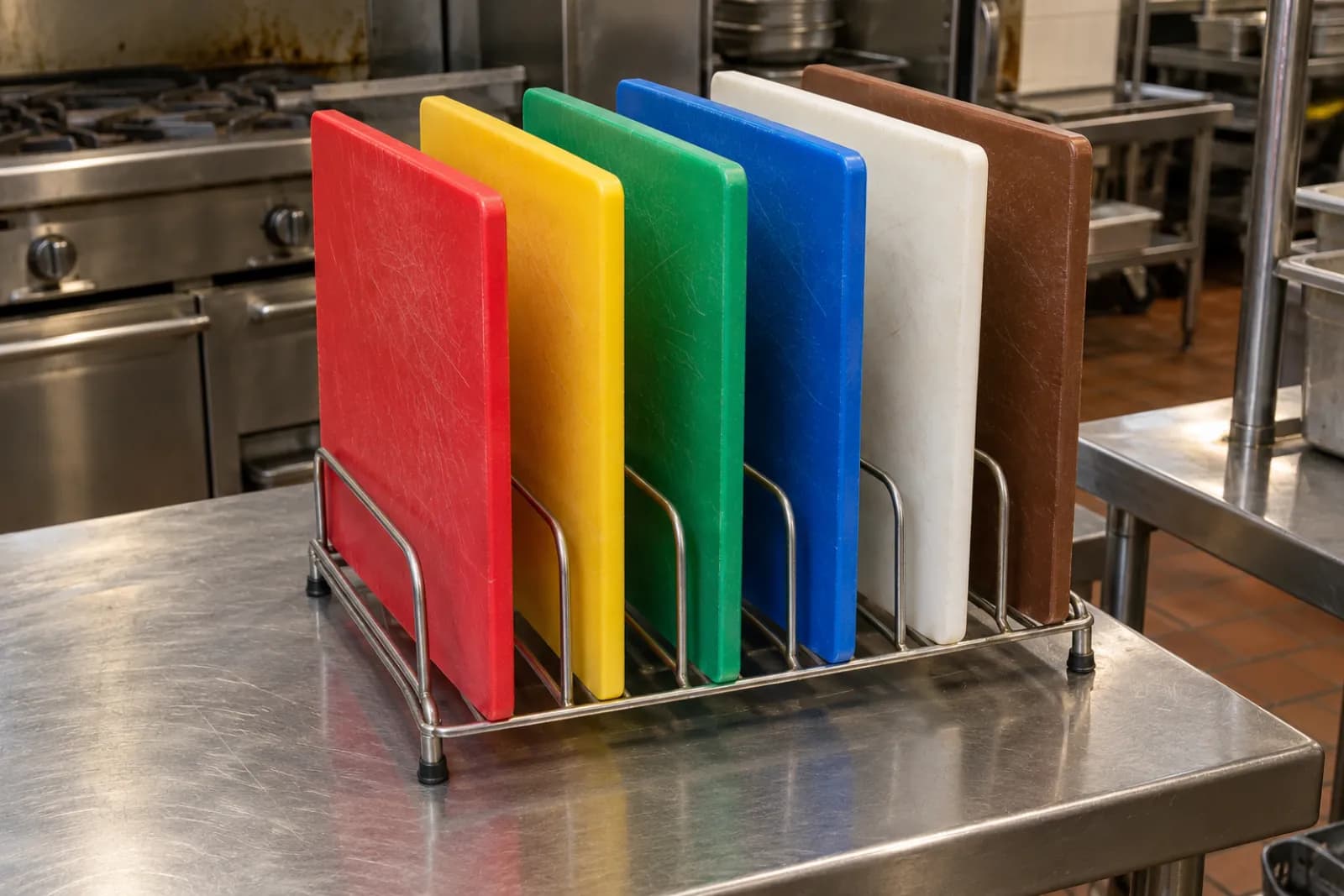
Biological, chemical and physical hazards, and how to keep raw foods and allergens apart from ready-to-eat food.
50 questions in the pool, free

The nine major US allergens, label reading, cross-contact and talking with guests about their allergies.
27 questions in the pool, free
Approved suppliers, checking deliveries, and when to reject a shipment.
20 questions in the pool, free