ServSafe Manager: Hot and cold holding Questions
Keeping food out of the temperature danger zone on hot and cold holding lines, and using time as a control.
41 questions in this topic. The quiz draws 20 at a time. Free, with no sign-up.
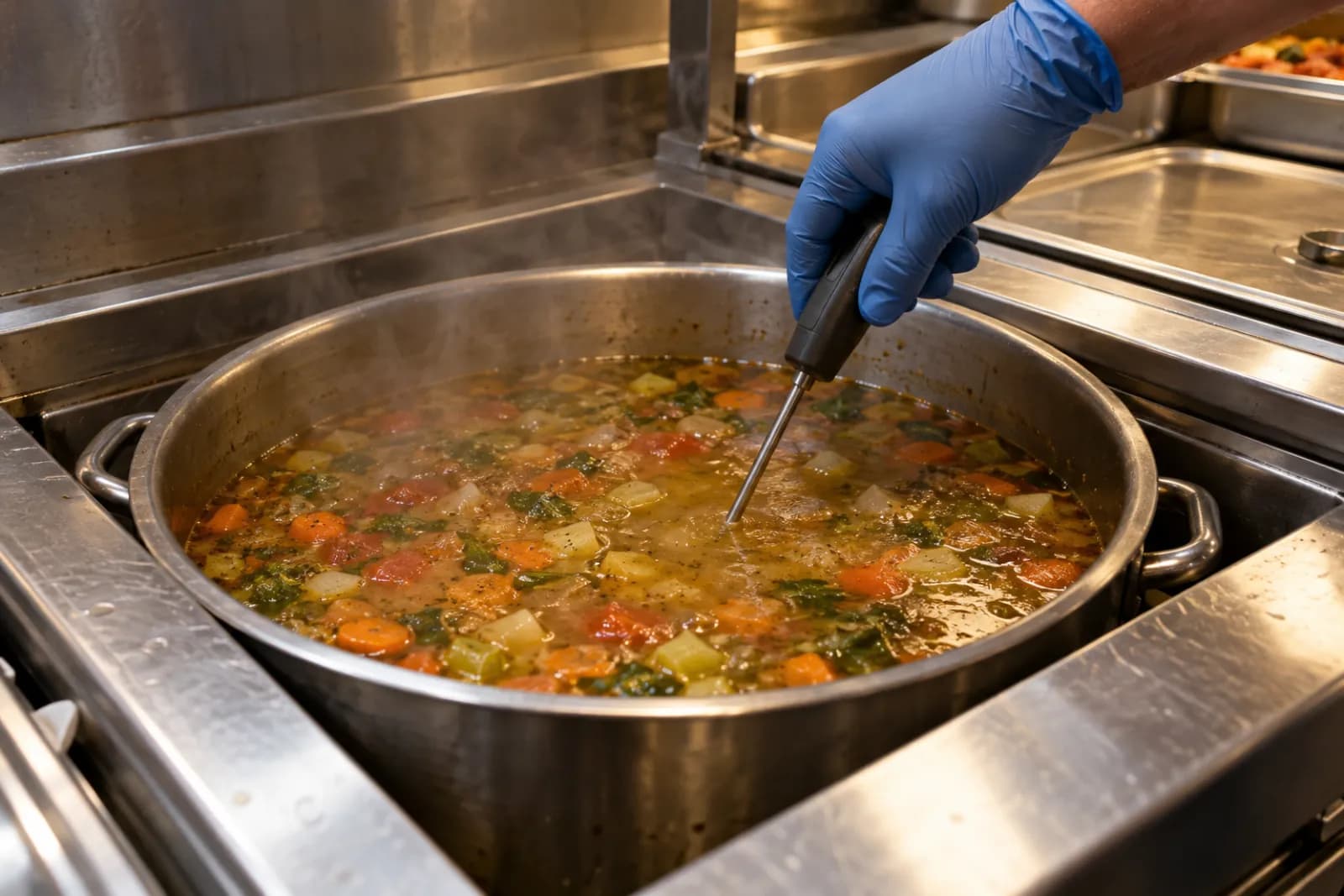
Hot and cold holding practice quiz
- 20 questions · 30 minutes · pass mark 70%
- Answers and explanations are shown at the end, with every question to review.
Key numbers
- Cold holding: 41°F or below
- Hot holding: 135°F or above
- Roasts cooked to the Food Code roast chart: may hold at 130°F or above
- Time as a control, 4-hour limit: most food starts at 41°F or below, or 135°F or above
- Time as a control, 6-hour limit: food starts at 41°F or below and stays at 70°F or below
Source: FDA Food Code 2022, 3-501.16, 3-501.19, Annex 3 (3-501.16)
What is the danger zone temperature?
The temperature danger zone is 41°F to 135°F. Hold cold food at 41°F or below and hot food at 135°F or above, so it stays out of the zone.
10 sample hot and cold holding questions and answers
10 of our 41 questions, with the answer and why.
1. For ordinary hot-held TCS food outside a special roast exception, what is the minimum holding temperature?
Answer: 135°F (57°C)
- A) 135°F (57°C) (correct answer)
- B) 125°F (52°C)
- C) 115°F (46°C)
- D) 130°F (54°C) for every hot-held food
Why: Ordinary hot holding requires at least 135°F. 125°F is below the ordinary hot-holding minimum.
Source: FDA Food Code 2026, 3-501.16
2. Which hot-held item may qualify for the model code's 130°F (54°C) minimum instead of the ordinary 135°F (57°C) minimum?
Answer: A roast cooked or reheated under the specified roast provisions
- A) A roast cooked or reheated under the specified roast provisions (correct answer)
- B) Every cooked poultry dish
- C) Every soup made that morning
- D) Any food in a covered pan
Why: The lower holding minimum is limited to qualifying roasts. Ordinary poultry dishes do not automatically receive the roast exception.
Source: FDA Food Code 2026, 3-501.16
3. Food under the standard four-hour time-control method leaves temperature control at 11 a.m. What deadline should its identifying mark show?
Answer: 3 p.m.
- A) 3 p.m. (correct answer)
- B) 5 p.m.
- C) 7 p.m.
- D) No deadline if food sells quickly
Why: Four hours after 11 a.m. is 3 p.m. 5 p.m. would exceed the four-hour method.
Source: FDA Food Code 2026, 3-501.19
4. During the six-hour cold-food time-control method, what maximum food temperature must not be exceeded?
Answer: 70°F (21°C)
- A) 70°F (21°C) (correct answer)
- B) 80°F (27°C)
- C) 90°F (32°C)
- D) Room temperature regardless of its value
Why: The six-hour route limits food to 70°F throughout the allowed period. 80°F exceeds the specified ceiling.
Source: FDA Food Code 2026, 3-501.19
5. A worker prepares a label for the six-hour cold method. In addition to the final deadline, what time must be identified?
Answer: When the food left cold holding
- A) When the food left cold holding (correct answer)
- B) When the food was originally prepared
- C) When the first customer serving was taken
- D) When the food first reached70°F (21°C)
Why: The six-hour route identifies both removal time and the six-hour endpoint. Preparation time can differ from the time the food left cold holding.
Source: FDA Food Code 2026, 3-501.19
6. Cut produce qualifies for the special 70°F (21°C) four-hour starting allowance. What additional temperature condition remains necessary?
Answer: Keep it at or below 70°F (21°C) for the allowed four hours
- A) Keep it at or below 70°F (21°C) for the allowed four hours (correct answer)
- B) Let it reach any temperature after cutting
- C) Use 90°F (32°C) as the new ceiling
- D) Ignore temperature if the surface looks moist
Why: The special starting allowance also limits the food throughout that period. The allowance retains a 70°F ceiling.
Source: FDA Food Code 2026, 3-501.19
7. Two properly refrigerated TCS portions measure 39°F (4°C) and 40°F (4°C). Which meets the ordinary cold-holding limit?
Answer: Both portions
- A) Both portions (correct answer)
- B) Only the 39°F portion
- C) Neither portion because both must be frozen
- D) Only the portion that was delivered earlier that day
Why: Both readings are at or below 41°F. 40°F also meets the 41°F maximum.
Source: FDA Food Code 2026, 3-501.16
8. Which time-control route requires an initial cold temperature and an upper 70°F (21°C) limit during holding?
Answer: The six-hour cold-food route
- A) The six-hour cold-food route (correct answer)
- B) Every hot-holding route
- C) The ordinary frozen-storage rule
- D) The roast cooking table
Why: These temperature conditions distinguish the six-hour cold route. Hot holding does not begin with a cold-food requirement.
Source: FDA Food Code 2026, 3-501.19
9. A trainee is learning which food temperatures let bacteria grow and make toxins. Which range should the trainee learn as the danger zone for TCS food?
Answer: 41°F to 135°F (5°C to 57°C)
- A) 45°F to 140°F (7°C to 60°C)
- B) 41°F to 135°F (5°C to 57°C) (correct answer)
- C) 32°F to 41°F (0°C to 5°C)
- D) 70°F to 165°F (21°C to 74°C)
Why: The Danger Zone runs from 41°F (5°C) to 135°F (57°C). That is why cold TCS food is held at 41°F (5°C) or less and hot TCS food at 135°F (57°C) or more.
Source: FDA Food Code 2022, Annex 3, 3-501.16 Hot and Cold Holding
10. A caterer drives hot pans of chicken and cold pans of potato salad to an off-site wedding. No time-control procedure is used. What holding rule applies to these TCS foods during the trip?
Answer: Keep the hot food at 135°F (57°C) or above and the cold food at 41°F (5°C) or below
- A) No temperature rule applies until the food is unloaded
- B) Keep the hot food at 135°F (57°C) or above and the cold food at 41°F (5°C) or below (correct answer)
- C) Hold both foods at 70°F (21°C) or below
- D) Hot food may drop to 120°F (49°C) during transport
Why: Hot and cold holding temperatures still apply while TCS food is transported, including to off-site catering events. Transport is not a break from temperature control unless an approved time-control procedure is used.
Source: FDA Food Code 2022, Annex 5, 5. Assessing Holding Time and Temperatures and Date Marking
Keep practicing
Hot and cold holding is one of 15 topics in our ServSafe Manager practice exam section.
Ready for a full paper? Try the free 90-question ServSafe practice test.
Studying for the other exam? Try the Food Handler hot and cold holding quiz.
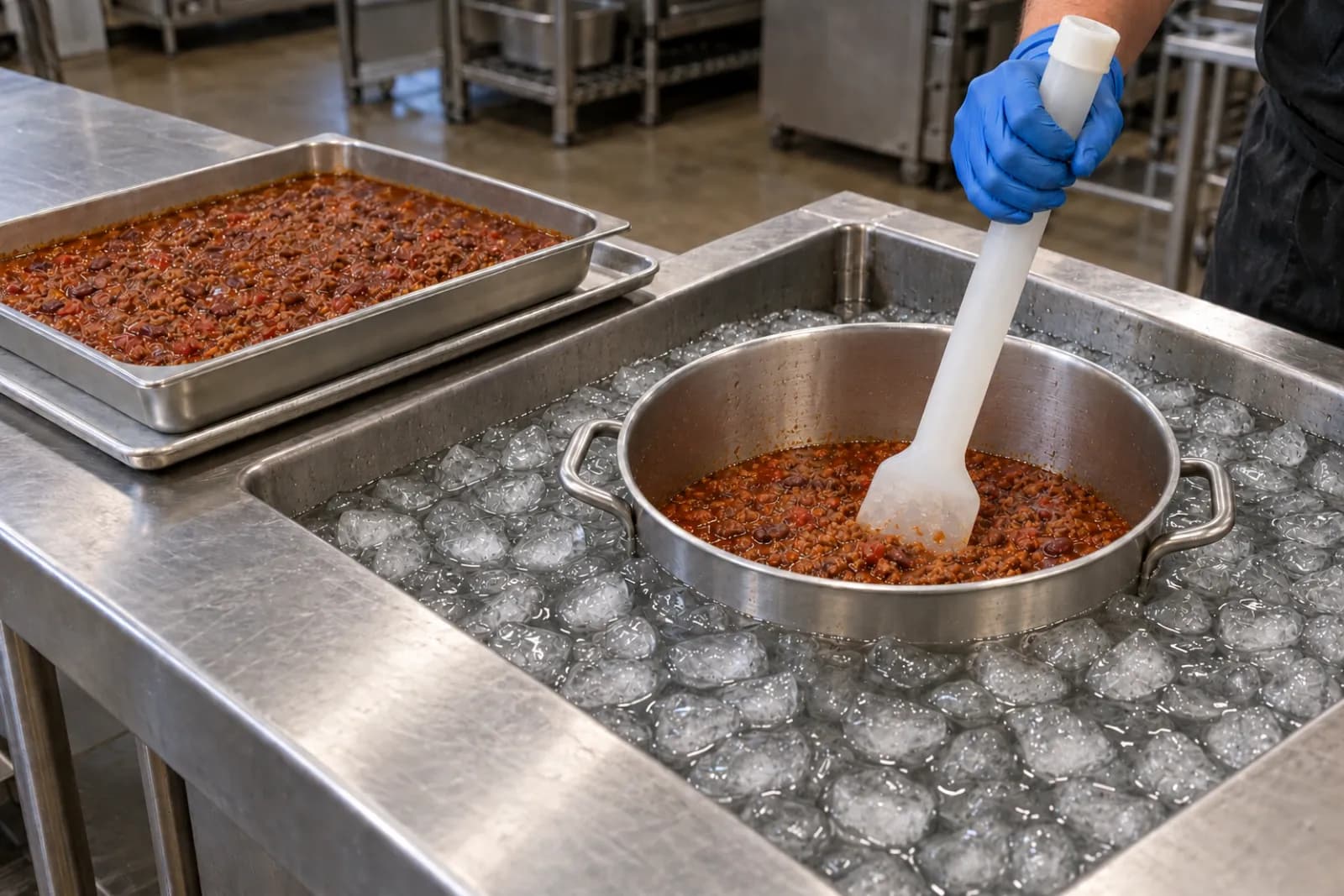
The two-stage cooling limits, safe cooling methods and how to reheat food for hot holding.
42 questions in the pool, free
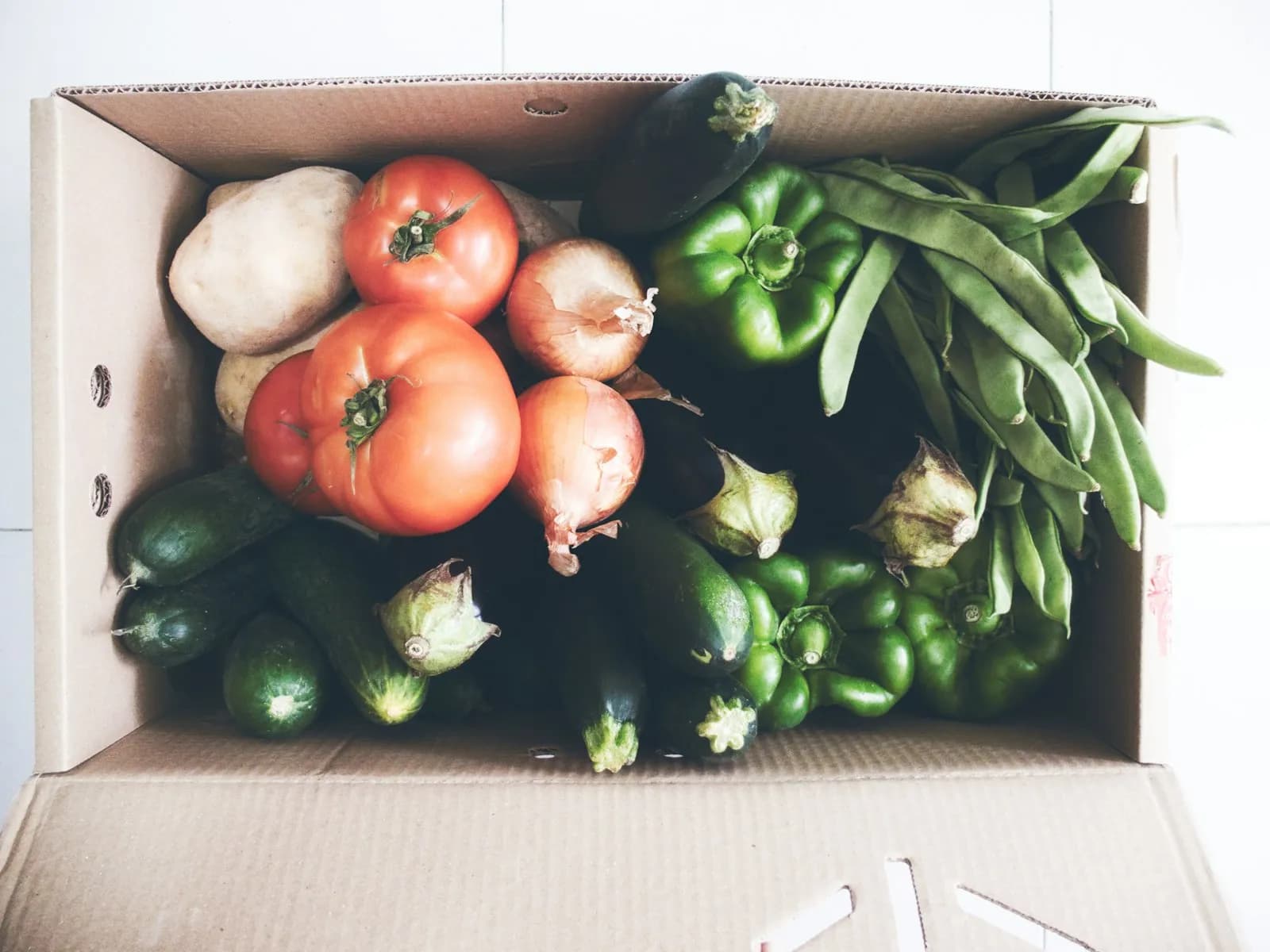
Approved suppliers, checking deliveries, and when to reject a shipment.
42 questions in the pool, free
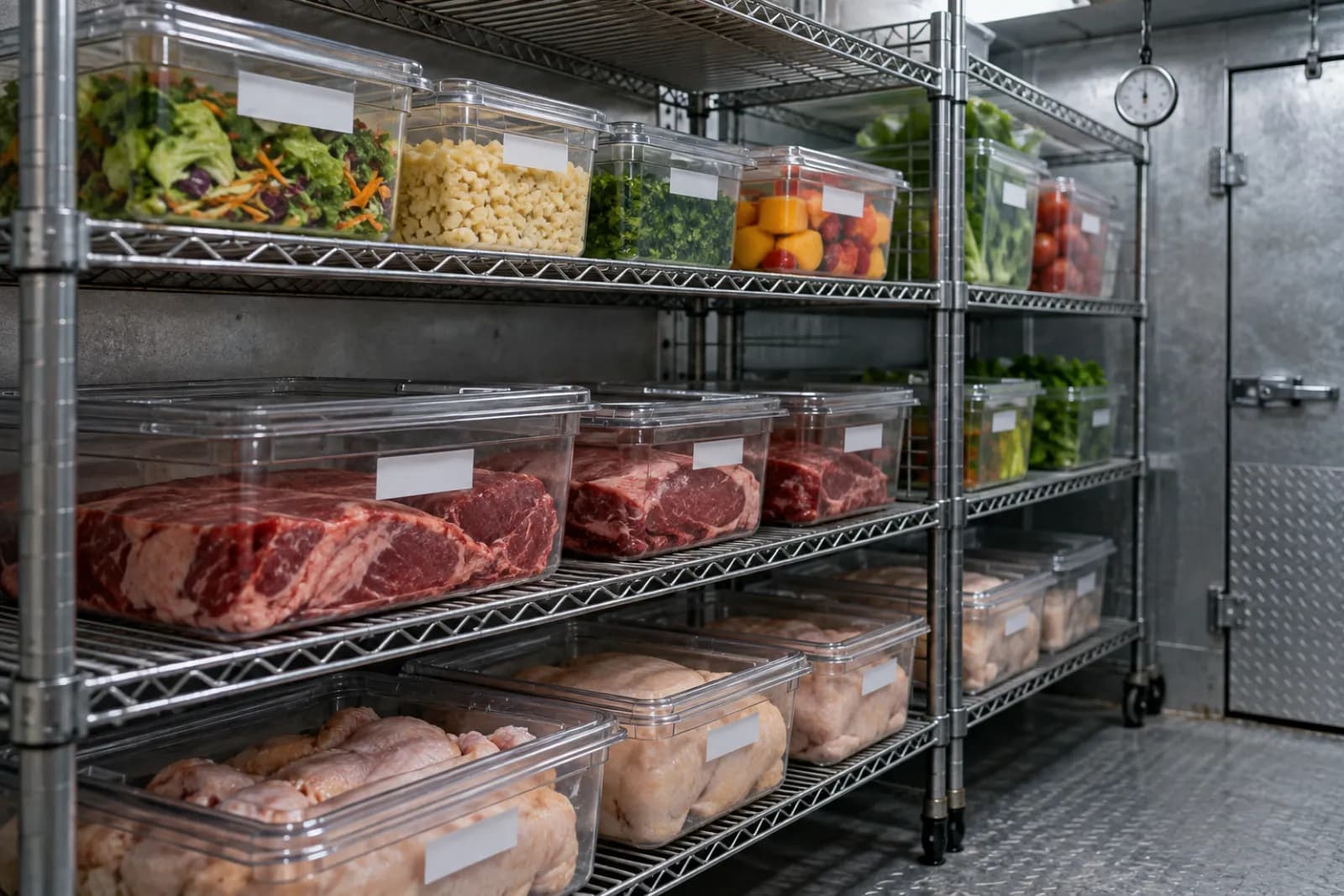
Shelf order, labels, date marking, first in first out and refrigerator and freezer temperatures.
41 questions in the pool, free